Ancient fruit
Cornus mas L. · Family: Cornaceae
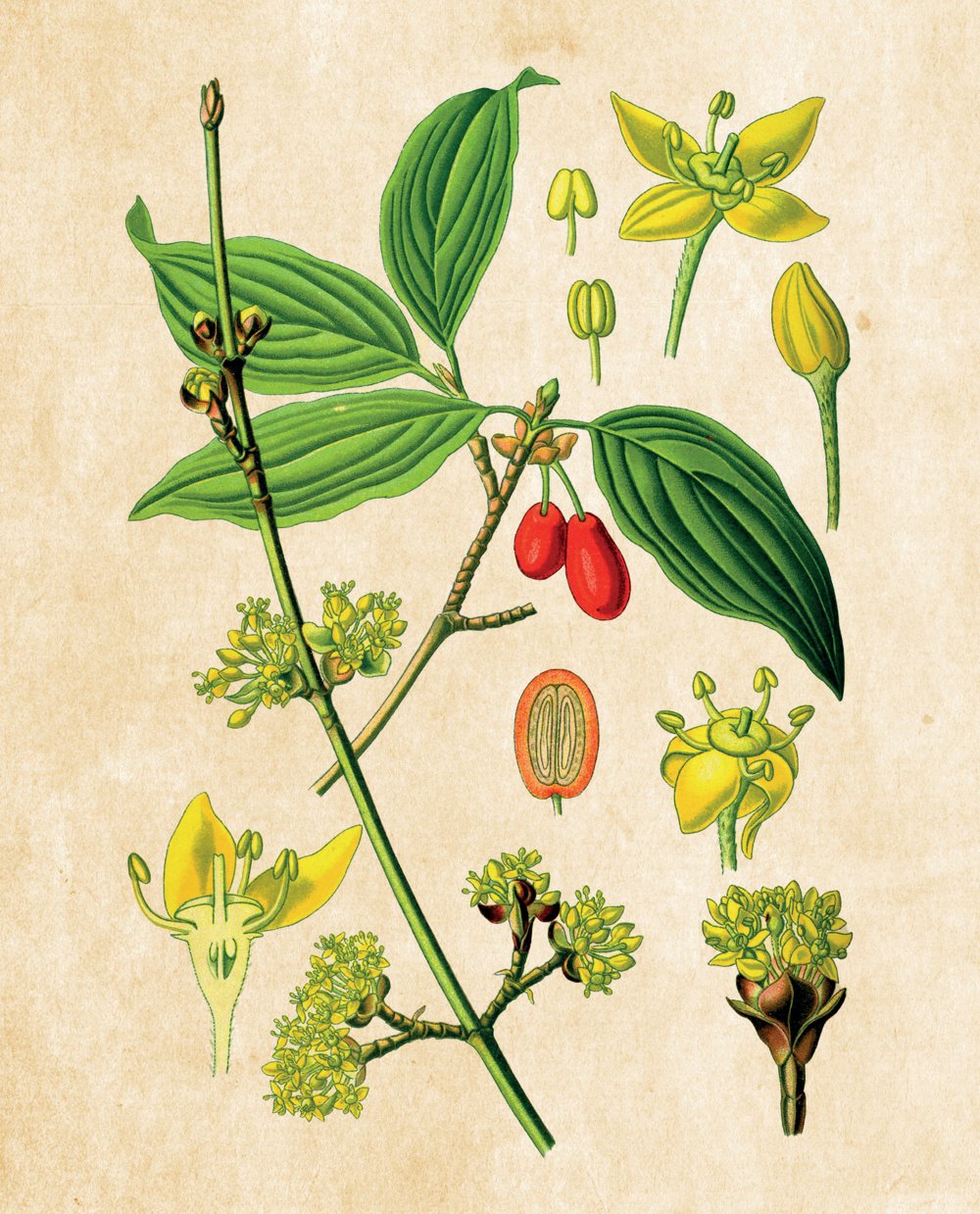
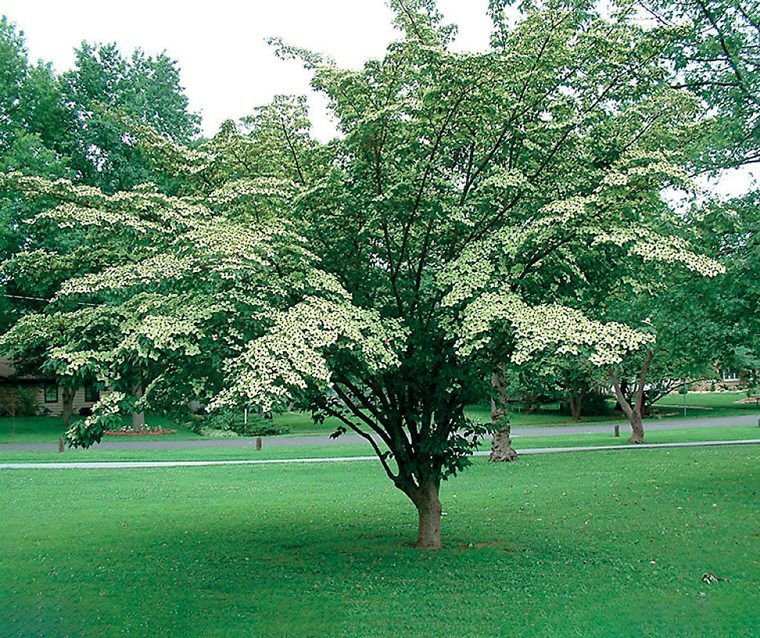
A shrubby species native to central-eastern Europe, whose range extends as far as Asia Minor. These are small, deciduous, broad-leaved plants up to 6 m tall and equally wide; very long-lived, they can become many centuries old despite a decidedly slow growth.
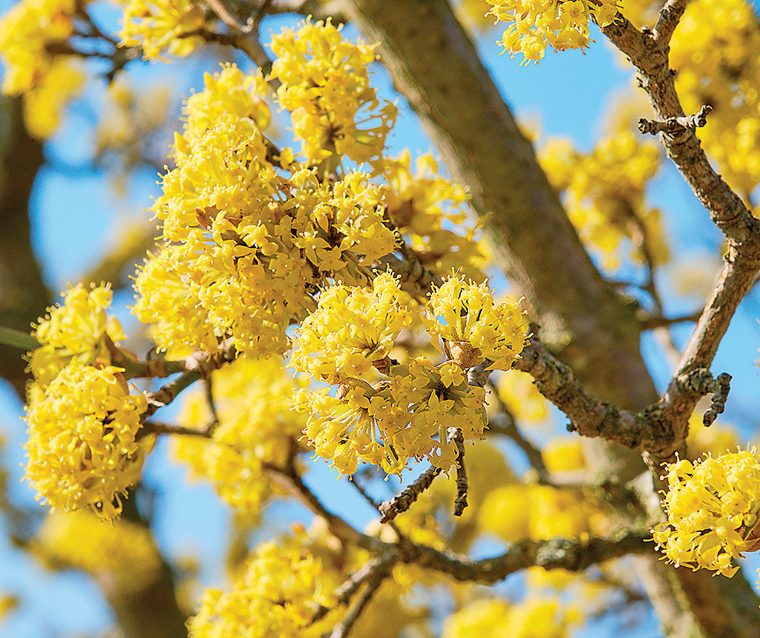
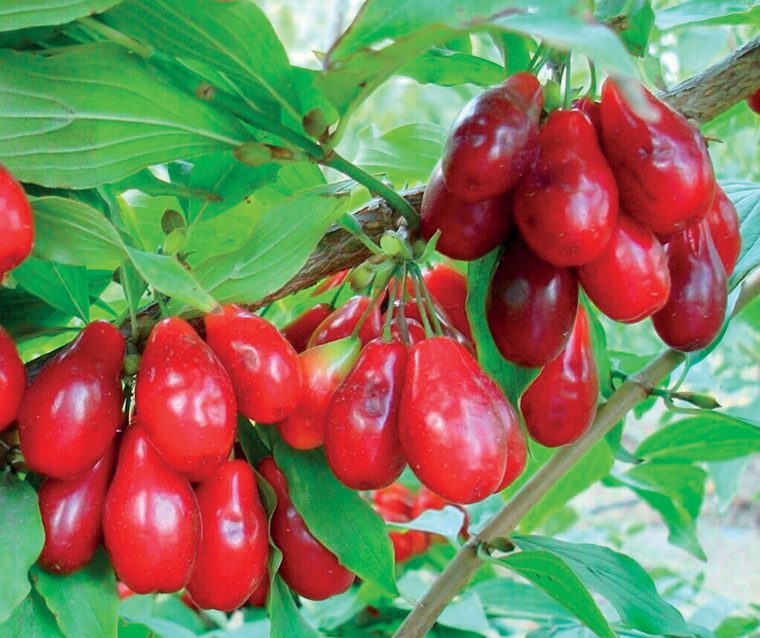
The leaves are simple and opposite, ovate or rounded, with a surface partly covered by fine down. It flowers between February and April, with greenish-yellow flowers that develop before the leaves. The fruit is an edible drupe with a sourish taste and olive shape, with a single bony seed; it is scarlet red, coral or yellow, and ripens in August.
The wood is hard, compact and highly resistant: much used in past centuries, it is now used to make pipes; in mythology, the Trojan Horse was made of this wood. It likes cool, shaded soils, and the fruits are processed into juices and jams. The plant has excellent dyeing properties and is regarded as a medicinal herb. The famous and sacred cornel of the Palatine is deeply linked to the legend of the founding of Rome.
In the Pope’s Orchard it is brought back as a historic, now-forgotten species of the Tusculan territory: grown without synthetic chemicals, with shallow roots (within 1.5 m) so as not to interfere with the archaeology below.
Cultivars present
Corniolo
Gallery