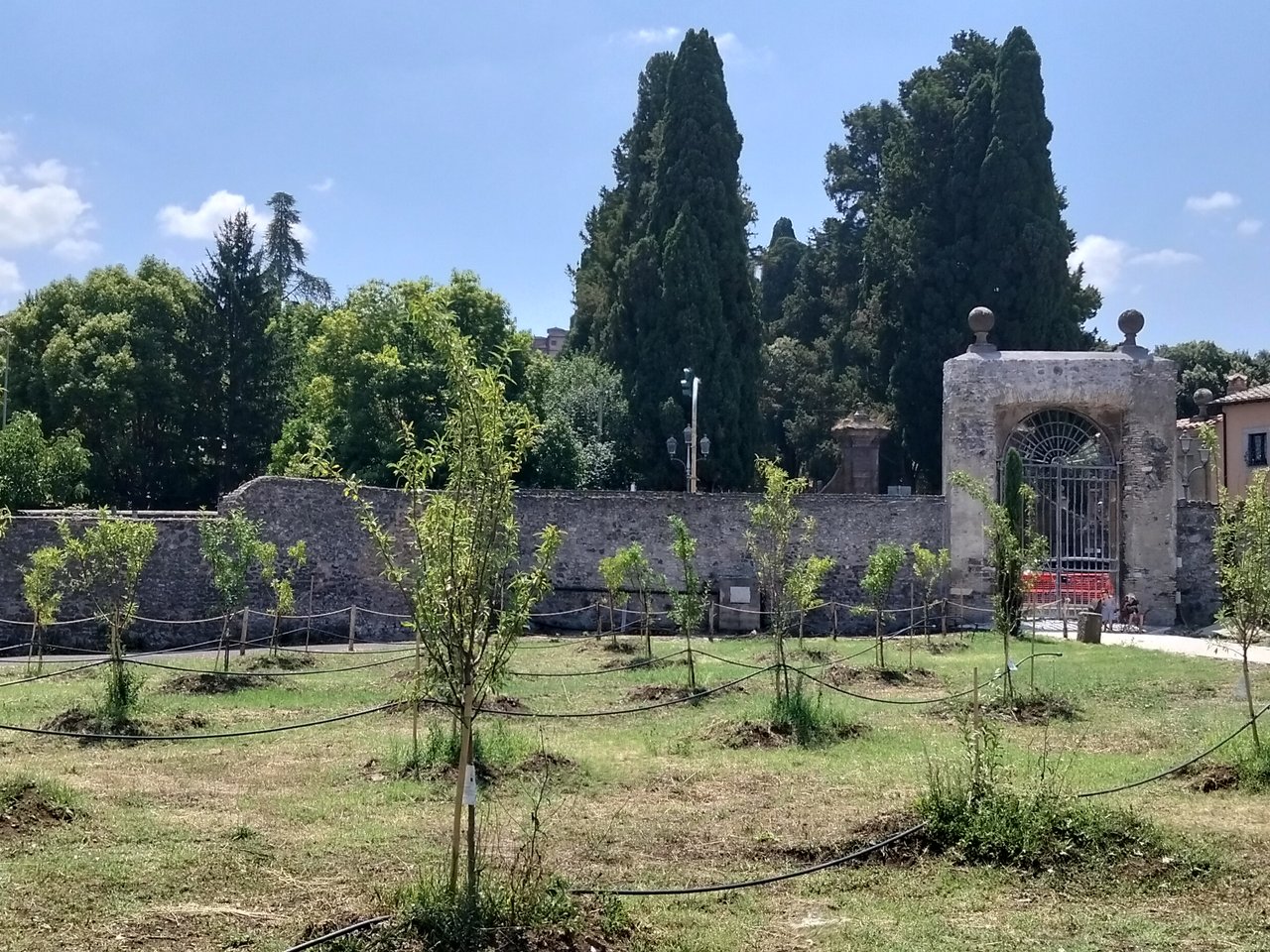
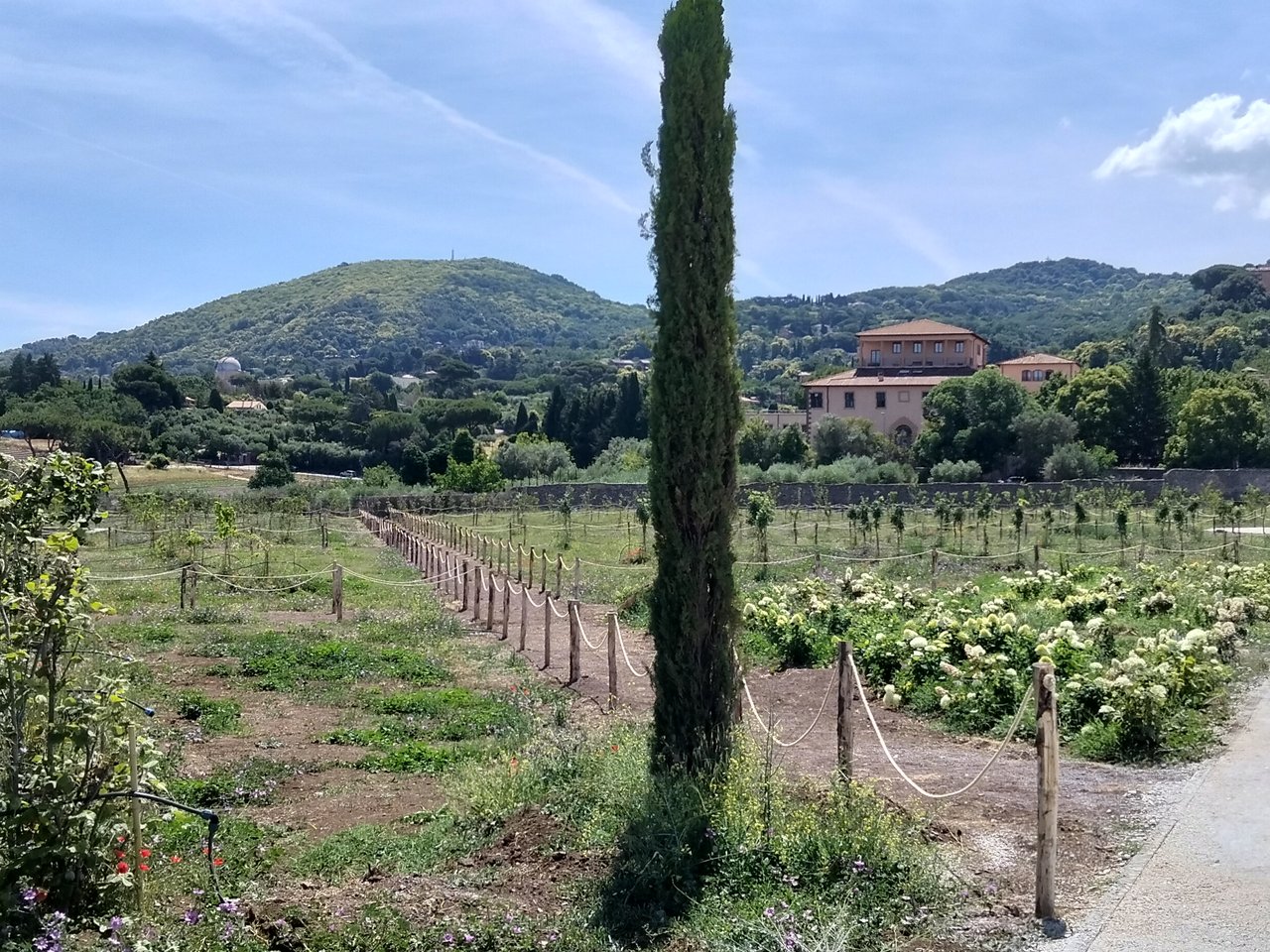
The opportunity to recover the Barco proper — the upper platform laid out as a pomarium since the time of the Borghese family — came with the Ministry of Culture’s call “Programmes to enhance the identity of places: historic parks and gardens” (Next Generation EU – NRRP, Mission 1 Component 3 Investment 2.3), issued in 2022. At the prompting of IRVIT, the Regional Institute of the Tusculan Villas, the owners decided to take part alongside other prestigious historic residences of the district.
The underlying design idea pursues a twofold aim: to highlight the formal role of the Barco within the grand late-16th-century spatial composition of which it is an essential part, while offering visitors a place that is aesthetically pleasing and rich in educational interest.
The interplay between “below” and “above”, from “darkness” to “light”, will be the great fascination of the full visit.
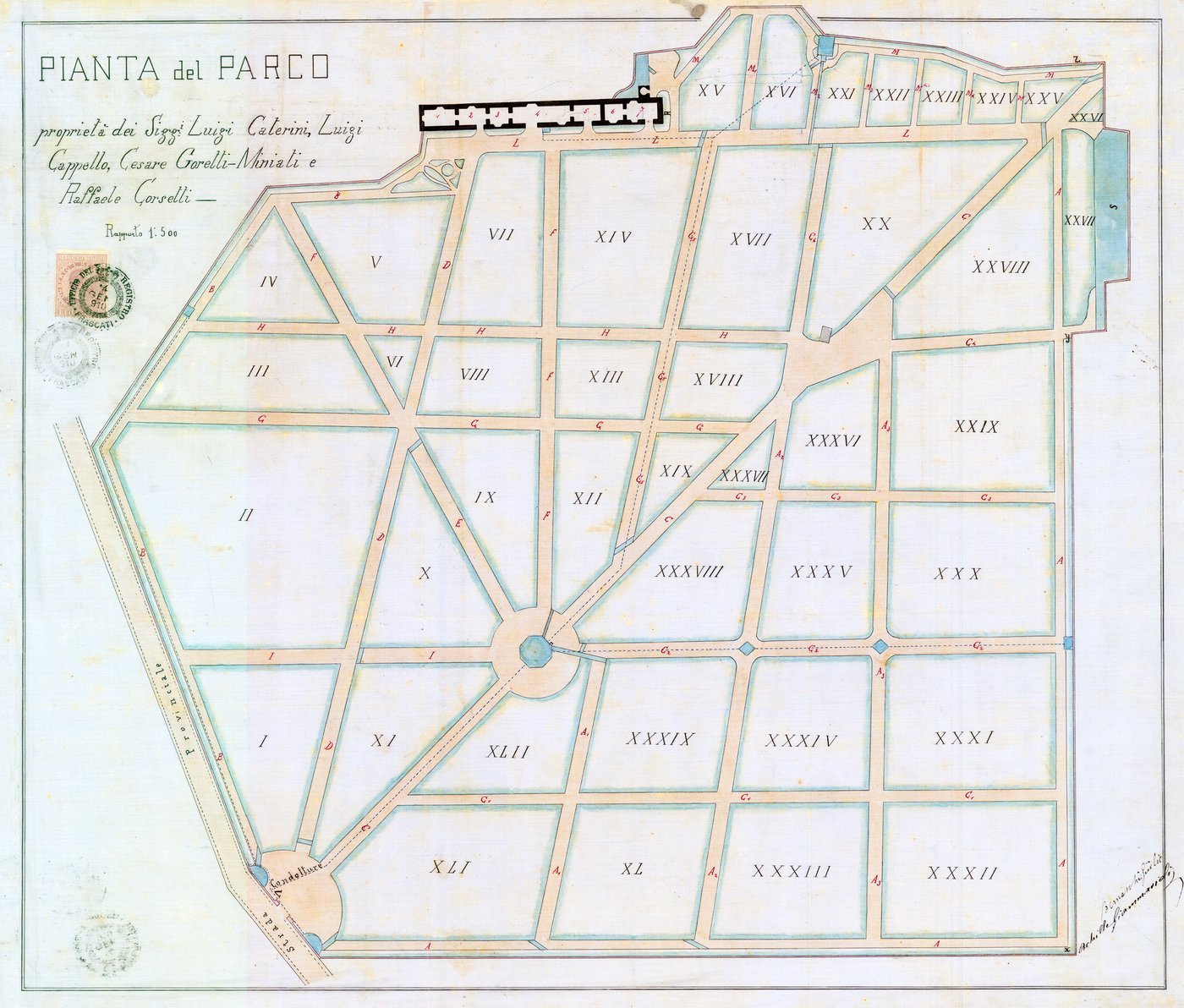
In the absence of specific historical documentation, inspiration was drawn from a drawing dividing the estate into agricultural lots, attributable to the Society of Jesus.
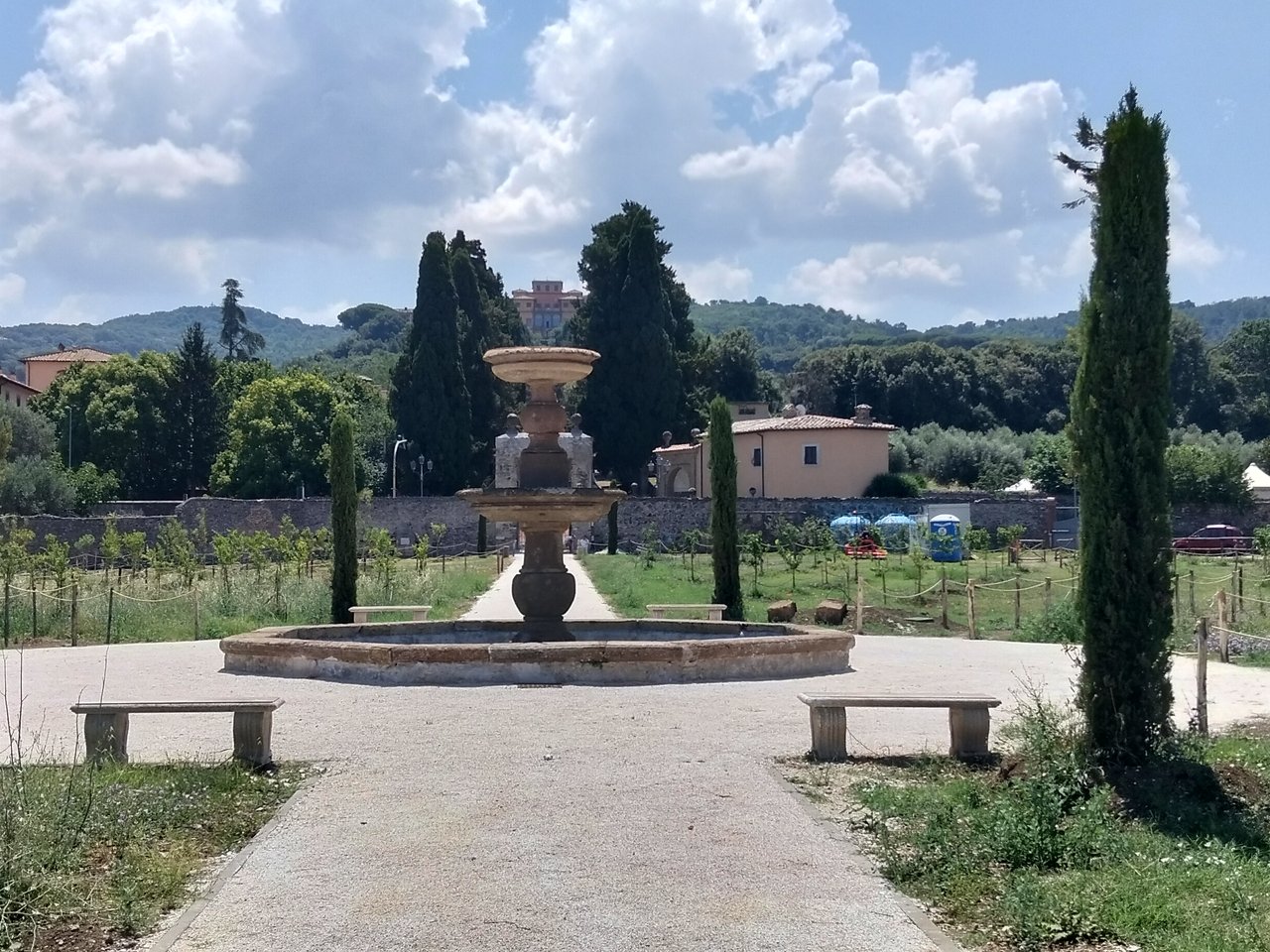
Targeted restoration of the historic elements and reconstruction of the garden landscape.
The visual heart of the composition, carved in local sperone tufa and most probably by Vasanzio. After an initial intervention in 2000 on the central jet, this phase focused on restoring the basin, which was variously deteriorated: rebuilding the cornice, repositioning the loose ashlars and waterproofing the bed.

Its stability was checked and the upper protection renewed with a cocciopesto coping, safeguarding the top exposed to the weather.

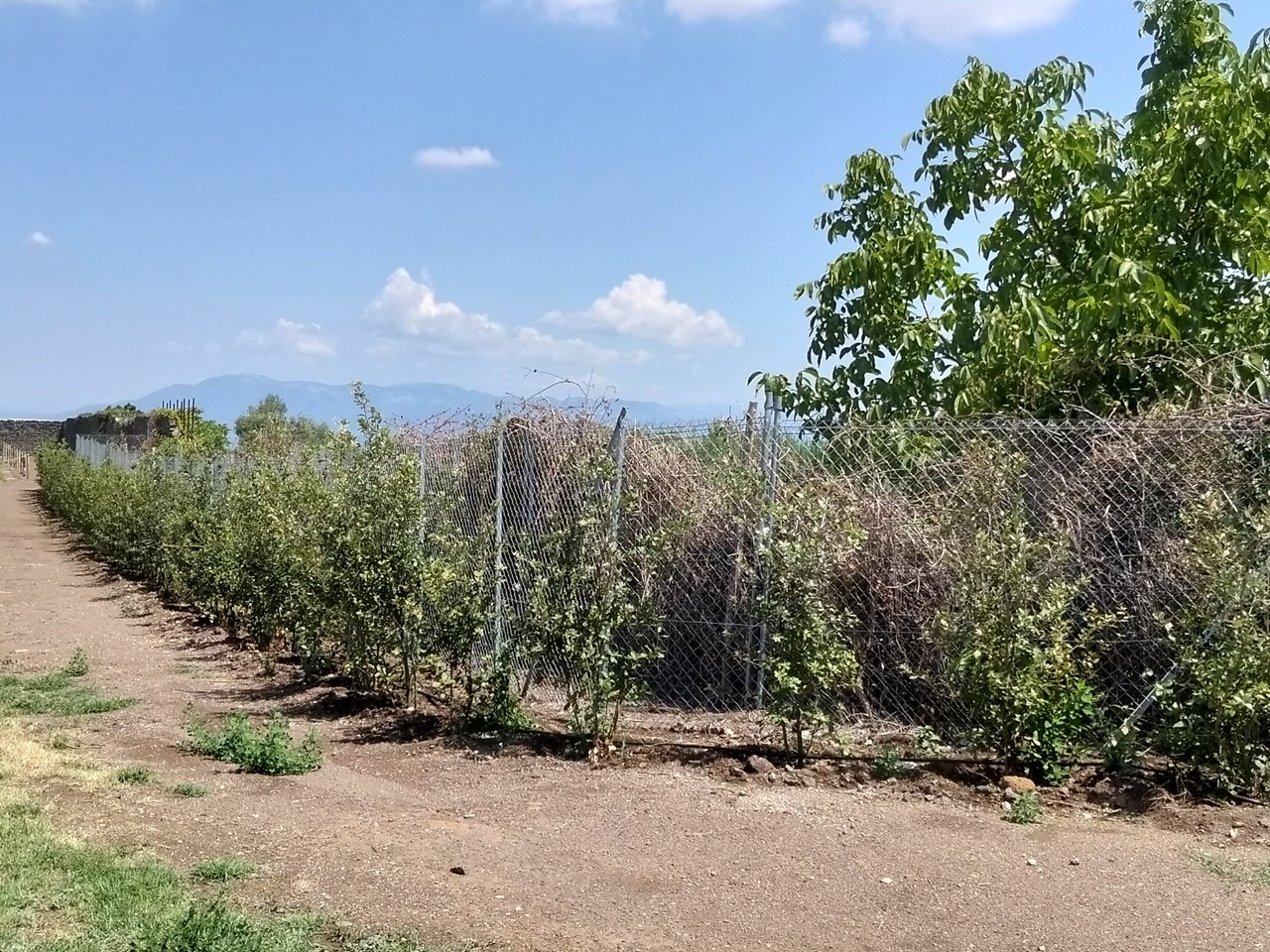
The North-East side has a long stretch, about 50 metres, that collapsed long ago and is hard to rebuild. So as not to contradict the original idea of the enclosed garden, the missing wall was replaced with a visual barrier: a holm-oak hedge running the whole length of the gap.

The central path linking portal, fountain and belvedere was restored with a pale gravel, clearly visible even from afar. Four pairs of cypresses mark its key points, “quoting” the access avenue of Mondragone.
The works were preceded by a series of soundings carried out through six trenches two metres deep, extending over much of the area, by archaeologists Paolo Dalmiglio and Laura Stamerra under the supervision of the Superintendence. In the upper portion, foundations of presumably agricultural structures dating to the mid-16th century came to light — perhaps a pre-Altemps phase — and are still being studied.
Works funded by the European Union — Italian Ministry of Culture, Next Generation EU – NRRP, M1C3 Investment 2.3 “Programmes to enhance the identity of places: historic parks and gardens”.