Ancient fruit
Diospyros kaki L. f. · Family: Ebenaceae
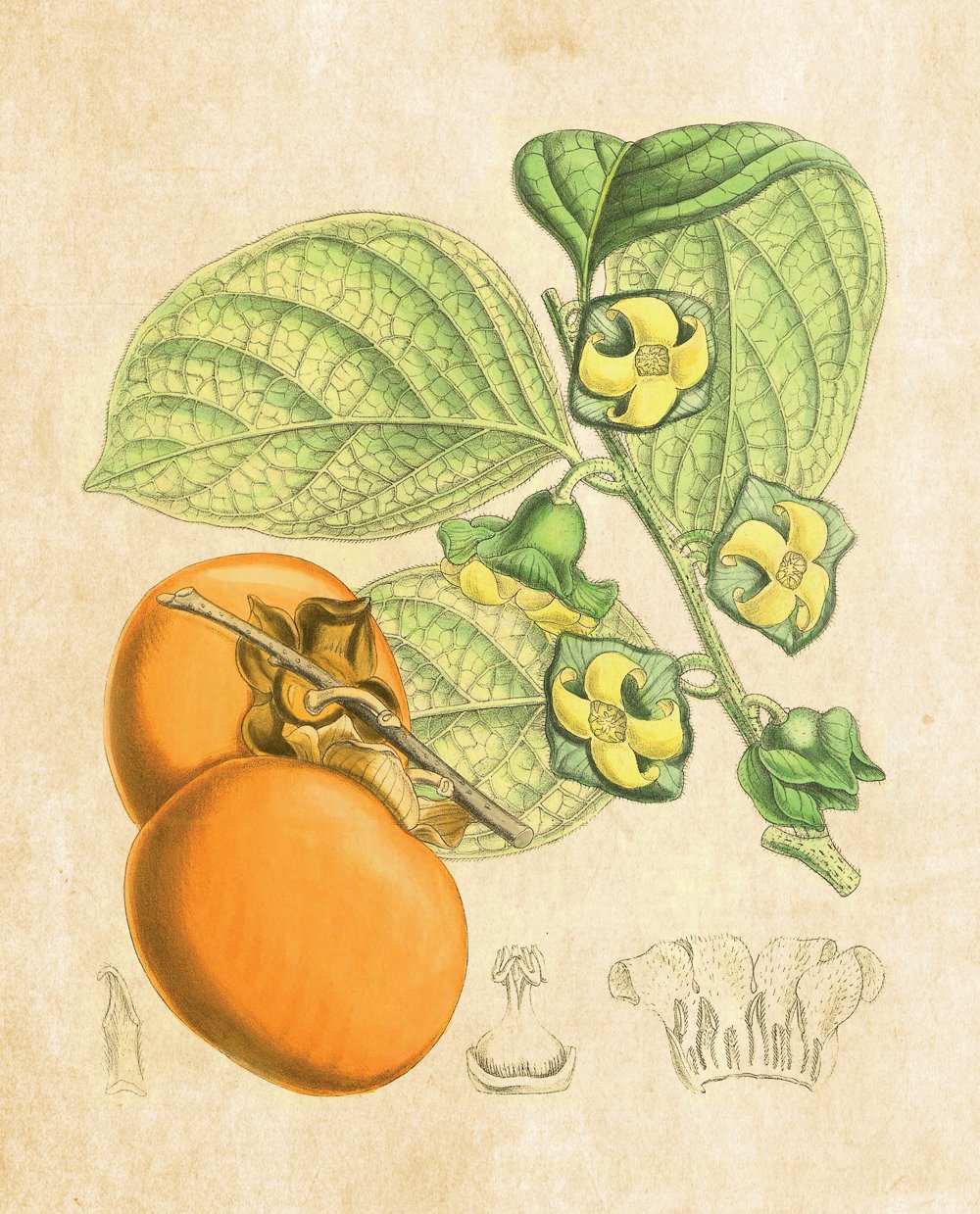
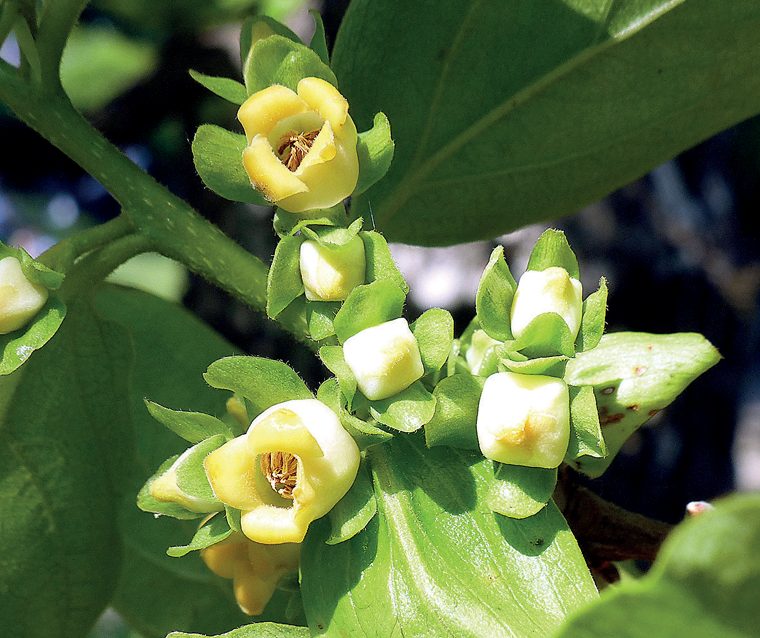
Native to China, where it has traditionally been cultivated for over 2000 years, its common name is a loanword from Japanese. It was introduced to Europe about two centuries ago and spread in Italy from 1880, finding an ideal habitat especially in Sicily and Emilia. Its scientific name literally means “grain of Zeus”. Also known as the apple of the Orient, it provides ample shade, has the merit of not being attacked by pests, and its yellow-red leaves are highly decorative in autumn until the first frosts.
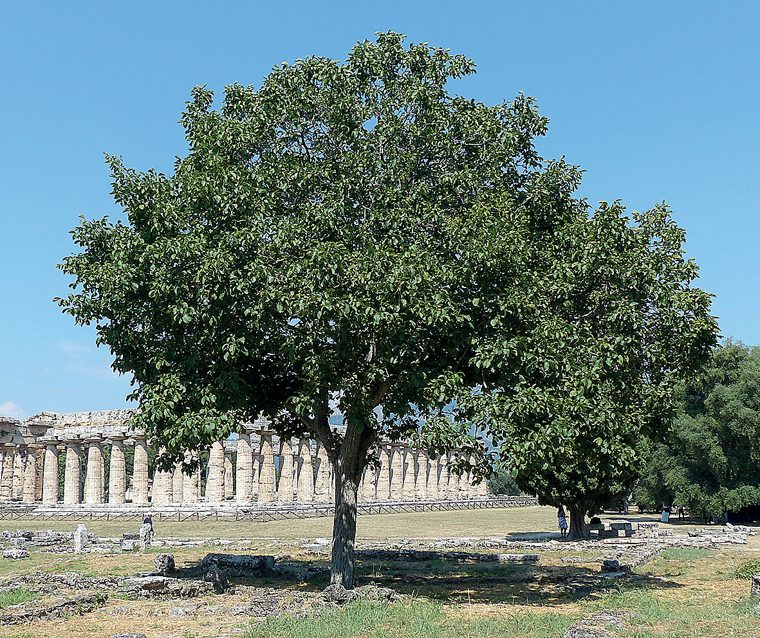
It is a tree that can become many centuries old despite its slow growth, and copes poorly with overly hot and humid climates. A deciduous, broad-leaved plant, it can reach 18 m in height, although it is usually kept lower for farming purposes; the leaves are large, broadly oval, glabrous and glossy.
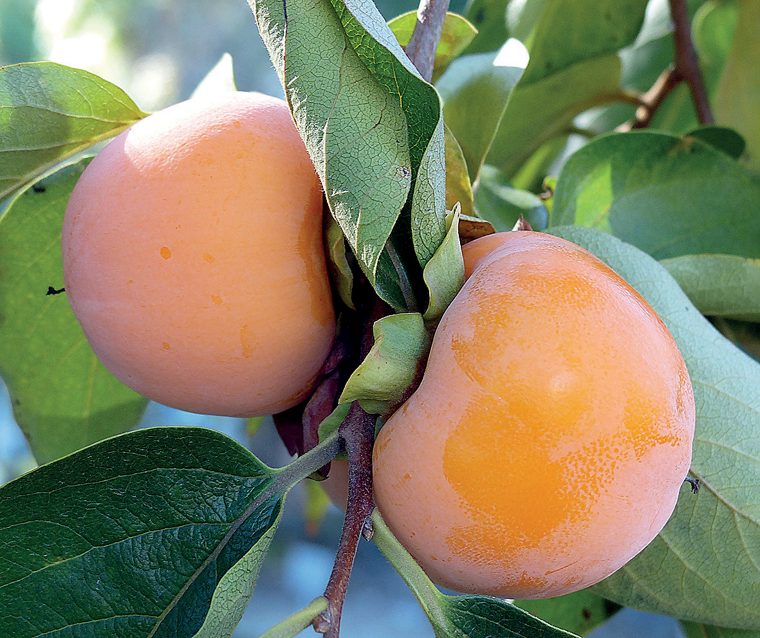
The fruits consist of a large, fleshy, spheroidal berry of a vivid yellow-orange colour; initially very astringent and rich in tannins, they become edible only after over-ripening. In Italian they are called cachi, loti, diospiri or cachi-mela: the latter, also known as “vanilla persimmons”, are eaten less ripe as they keep the typical crispness of an apple.
In the Pope’s Orchard it is brought back as a historic, now-forgotten species of the Tusculan territory: grown without synthetic chemicals, with shallow roots (within 1.5 m) so as not to interfere with the archaeology below.
Cultivars present
Vaniglia · Rojo brillante · Mela · Loto di Romagna
Gallery