Ancient fruit
Prunus amygdalus Stokes · Family: Rosaceae
In the Bible the almond is mentioned ten times, as one of the “choicest products of the land”. Present in Syria and Palestine, it was introduced to Sicily by the Phoenicians and the Greeks (the Romans called it the “Greek nut”), then spread to France and Spain.
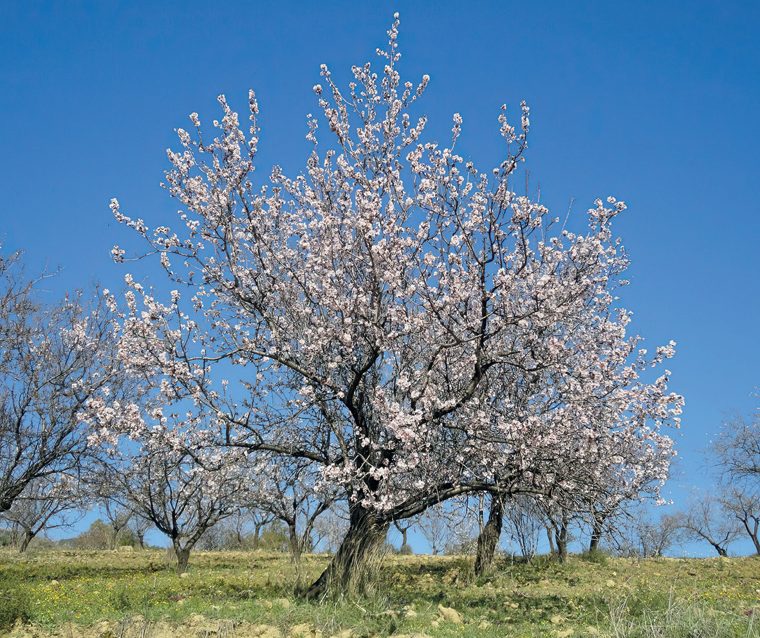
This plant is grown for its precious seed, the almond, which became edible only through cultivation: the fruits of the wild variant were initially roasted to remove their natural toxicity, until a genetic mutation in the domestic varieties, appearing as early as the first part of the Bronze Age, led to the disappearance of the glucoside amygdalin. It is a small, deciduous, broad-leaved tree that grows slowly to 7 m in height, yet is so long-lived it can become many centuries old.
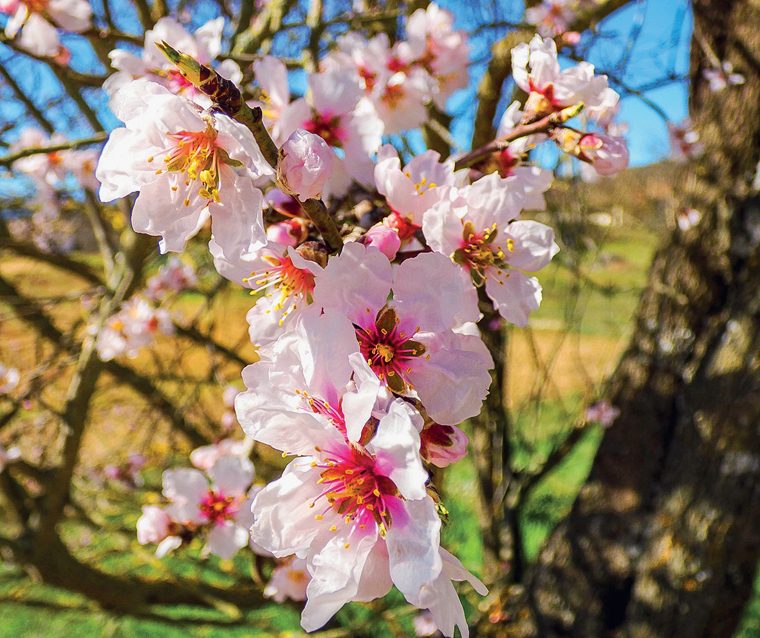
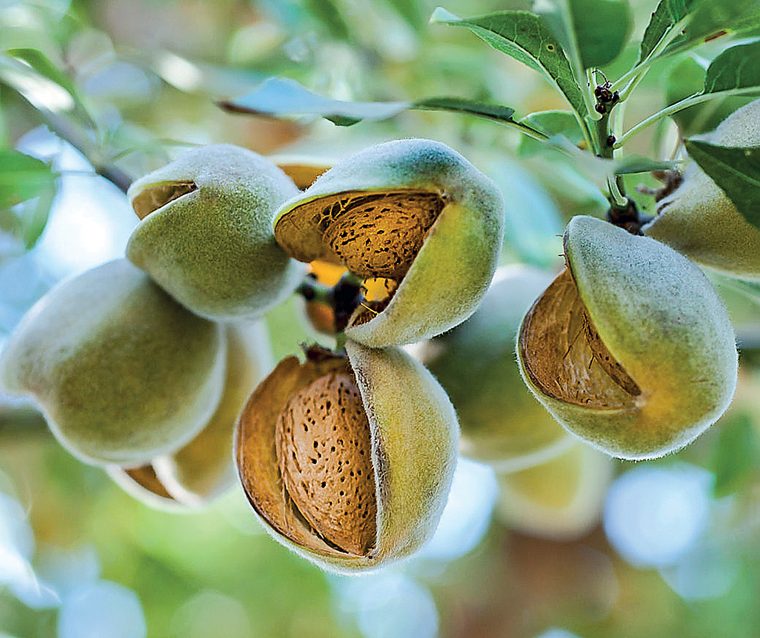
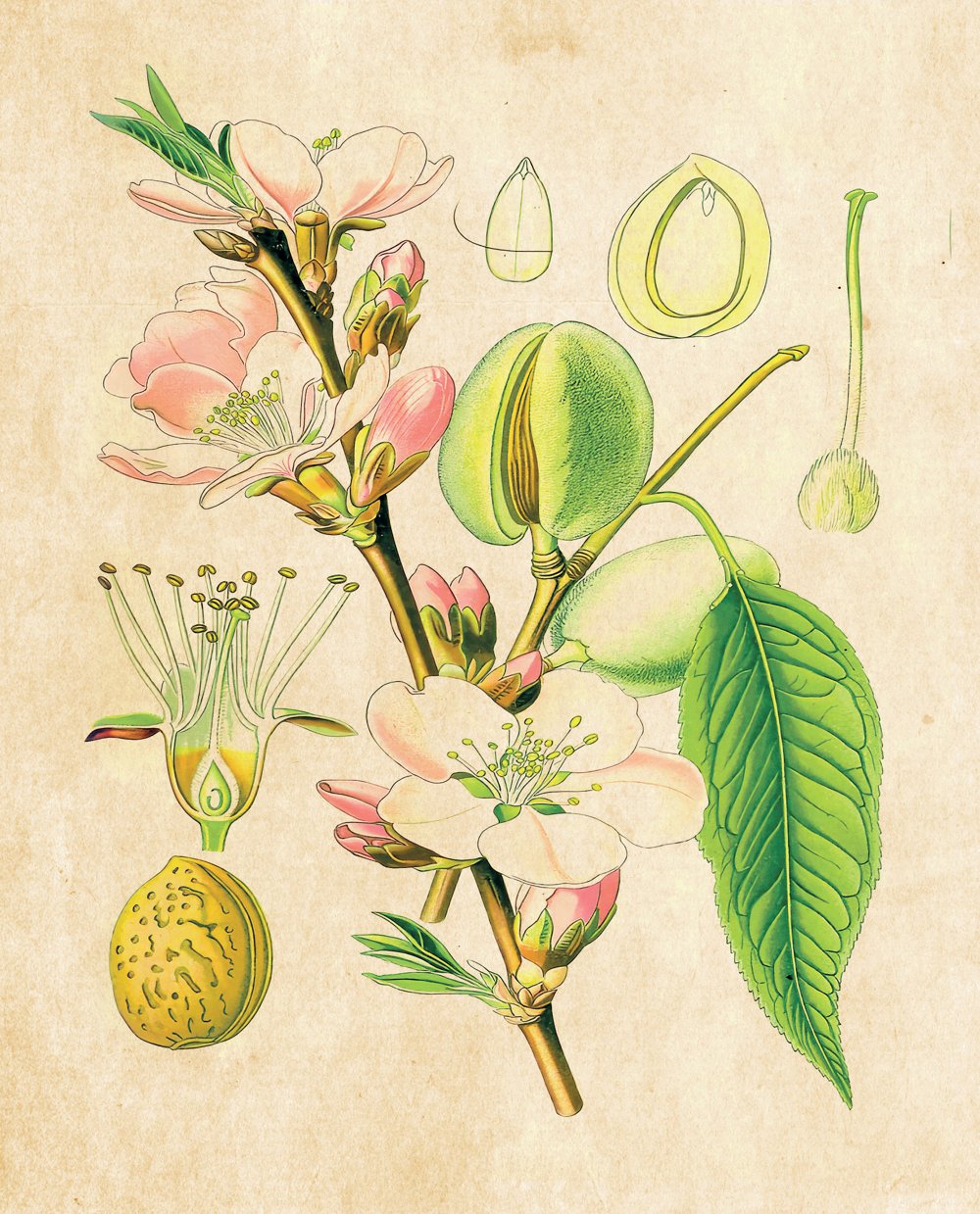
It has lanceolate, stalked leaves, blooms before all other trees in early spring with white or pinkish petals, and produces a drupe enclosing the seed in its woody shell, protected by a green hull, harvested between August and September. From these fruits, rich in vitamin E, an excellent flour is obtained as a skin cleanser and softener, as well as a protective oil for the skin; the plant is also an excellent honey species.
In the Pope’s Orchard it is brought back as a historic, now-forgotten species of the Tusculan territory: grown without synthetic chemicals, with shallow roots (within 1.5 m) so as not to interfere with the archaeology below.
Cultivars present
Supernova · Tuono · Genco · Ferraduel · Santa Caterina
Gallery