Ancient fruit
Punica granatum L. · Family: Lythraceae
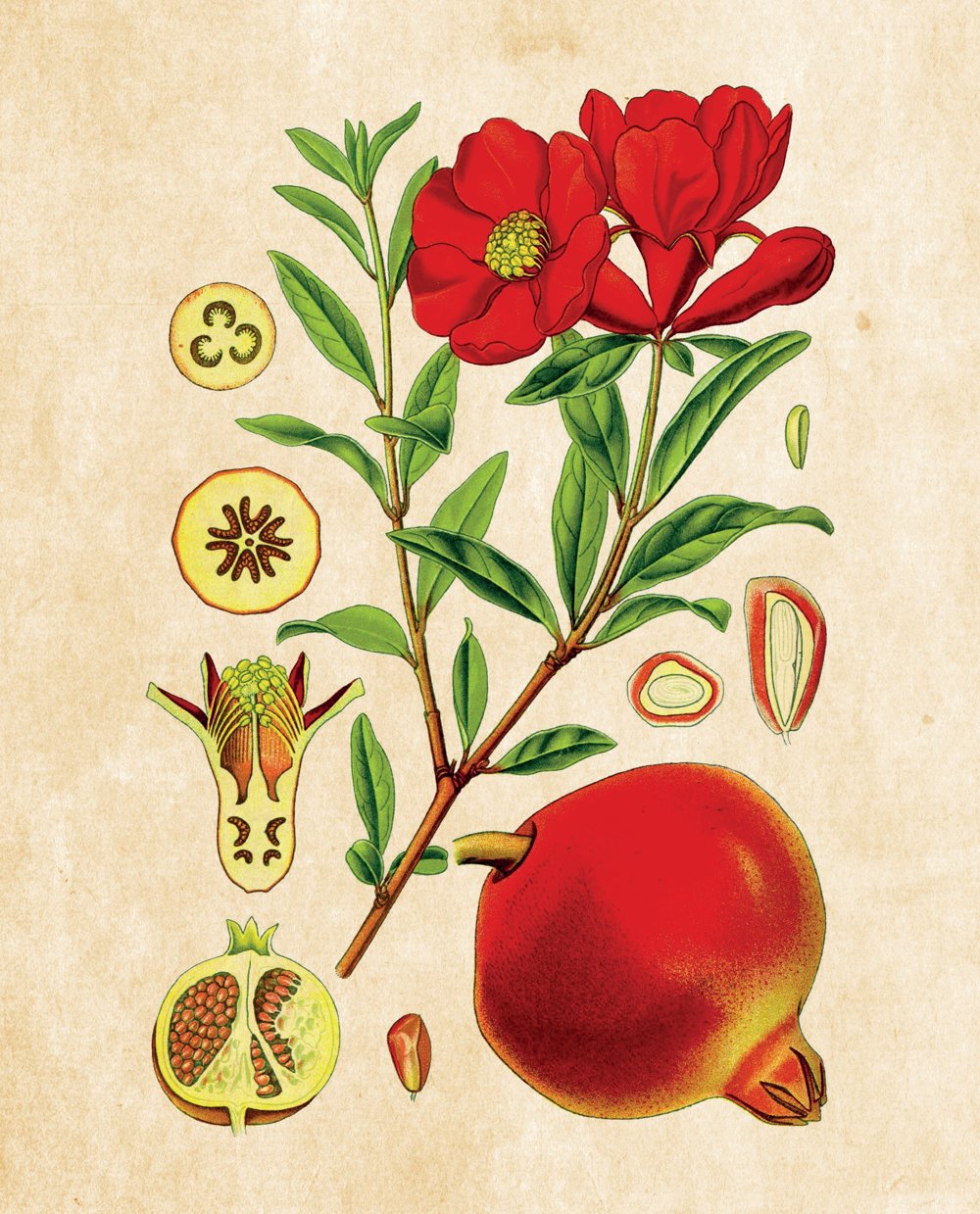
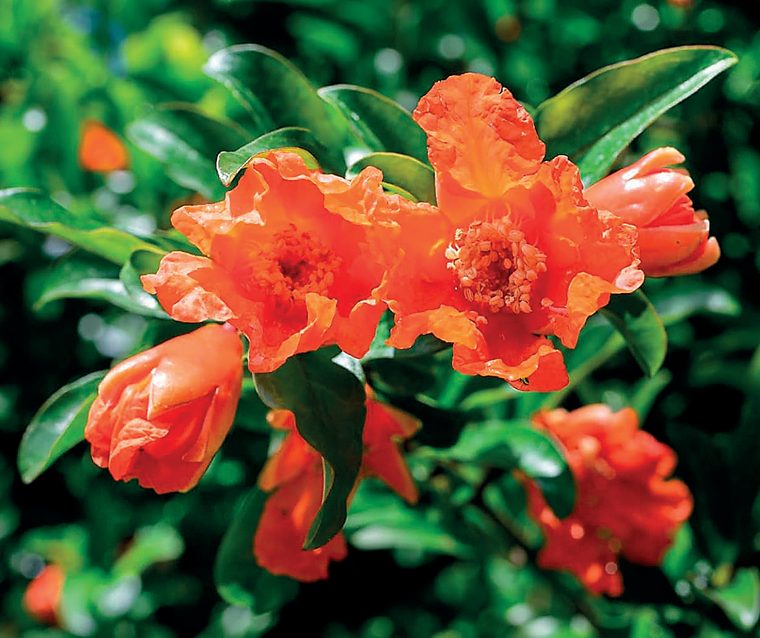
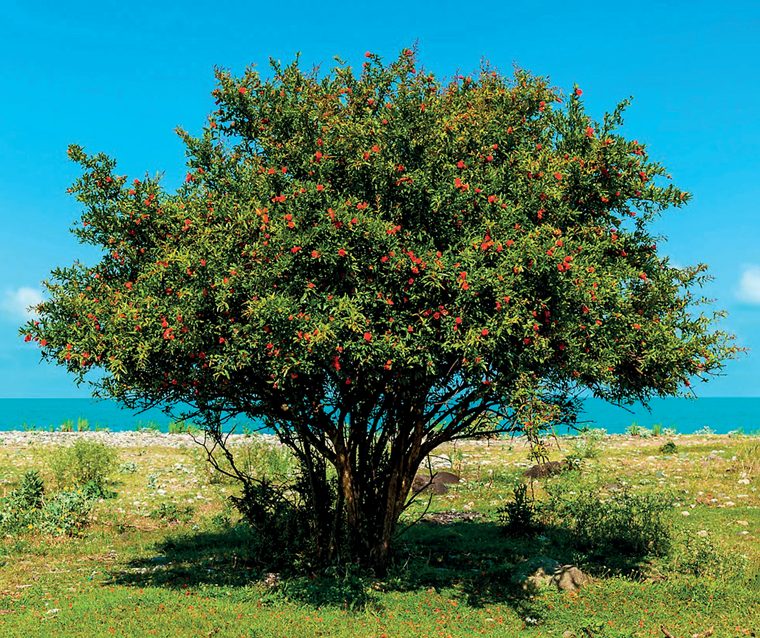
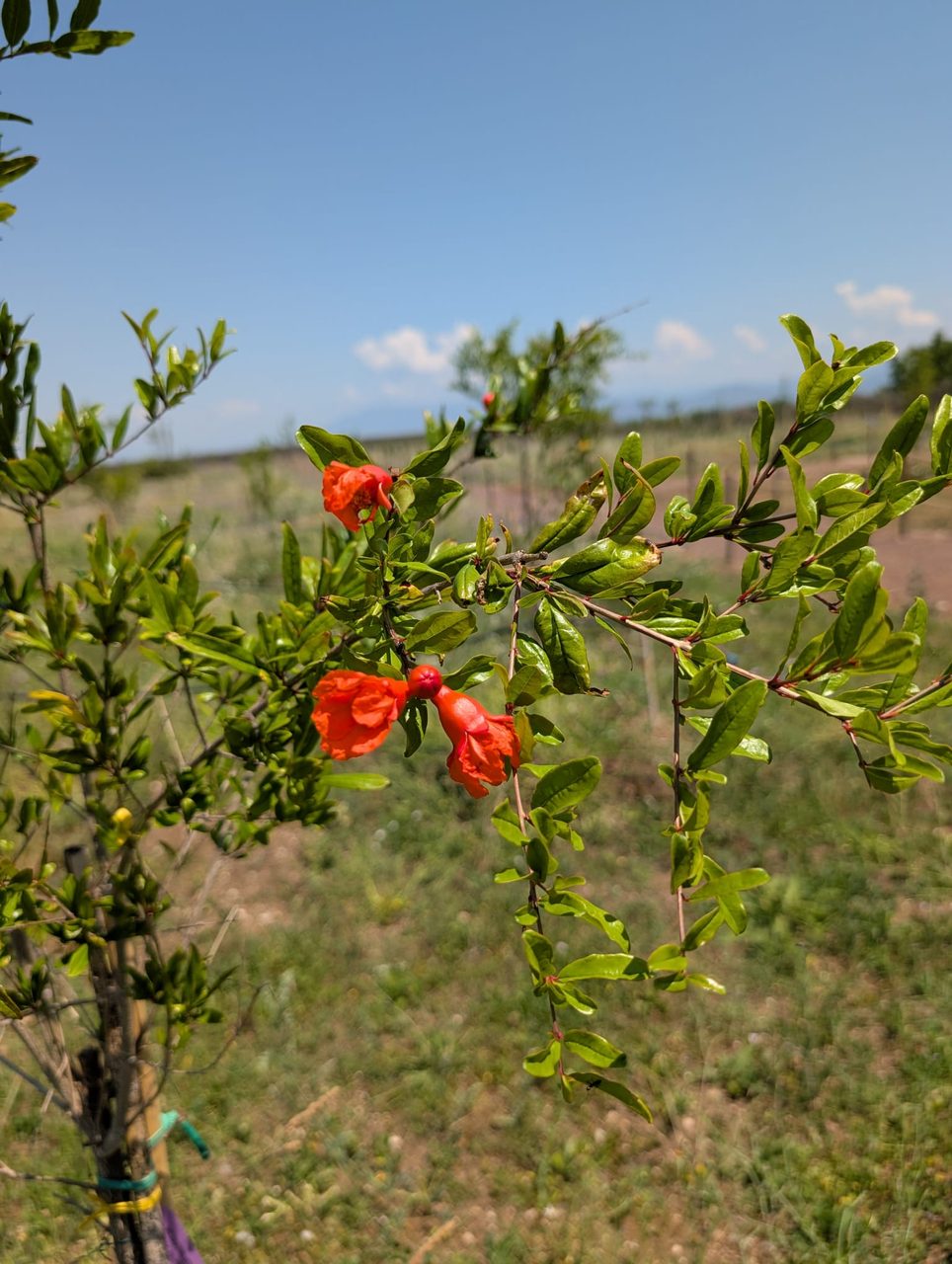
Across the Mediterranean it was spread by Phoenicians, Greeks, Romans and Arabs, and introduced to America by the Spanish; its scientific name derives from the Roman name for Tunisia. It appears as a small deciduous, broad-leaved tree or shrub; it can reach 6 m in height and live over 100 years. The leaves are glossy, narrow and elongated; the flowers are a vivid red.
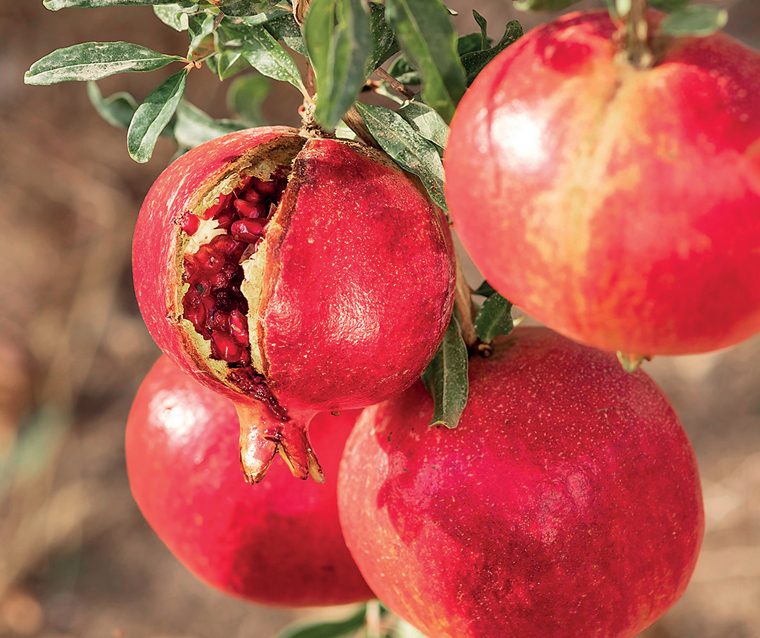
The fruit (pomegranate) is a berry of very robust consistency, with a hard, leathery skin, round in shape, with red arils that are sweet and slightly sour; the varieties are very numerous. Resistant to every kind of disease, requiring only a dry environment with high sunshine, it is widely grown both as a generous fruit tree and as a splendid ornamental plant.
An infusion of the petals is used as a refresher for the gums; from the rind a dye for textile fibres is obtained; the seeds, rich in vitamin C, have diuretic properties and are used to make syrups and grenadine. The fruit of the Tree of Life in the Garden of Eden is supposed to have been a pomegranate: mentioned in the Koran, in Renaissance painting it is depicted as an auspicious symbol of fertility.
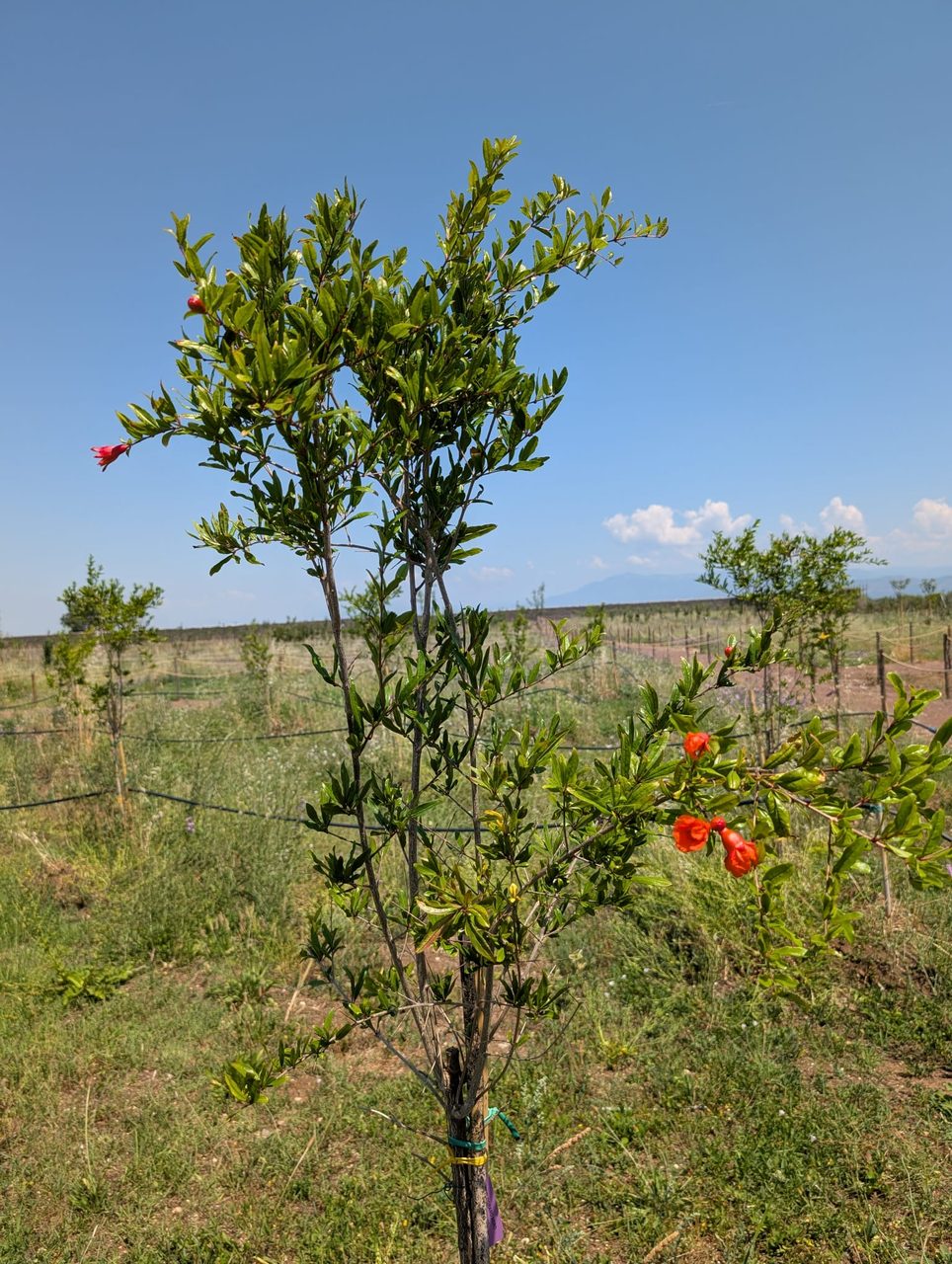
In the Pope’s Orchard it is brought back as a historic, now-forgotten species of the Tusculan territory: grown without synthetic chemicals, with shallow roots (within 1.5 m) so as not to interfere with the archaeology below.
Cultivars present
Dente di cavallo · Nero · Spagnolo
Gallery