Ancient fruit
Prunus cerasus Scop. · Family: Rosaceae
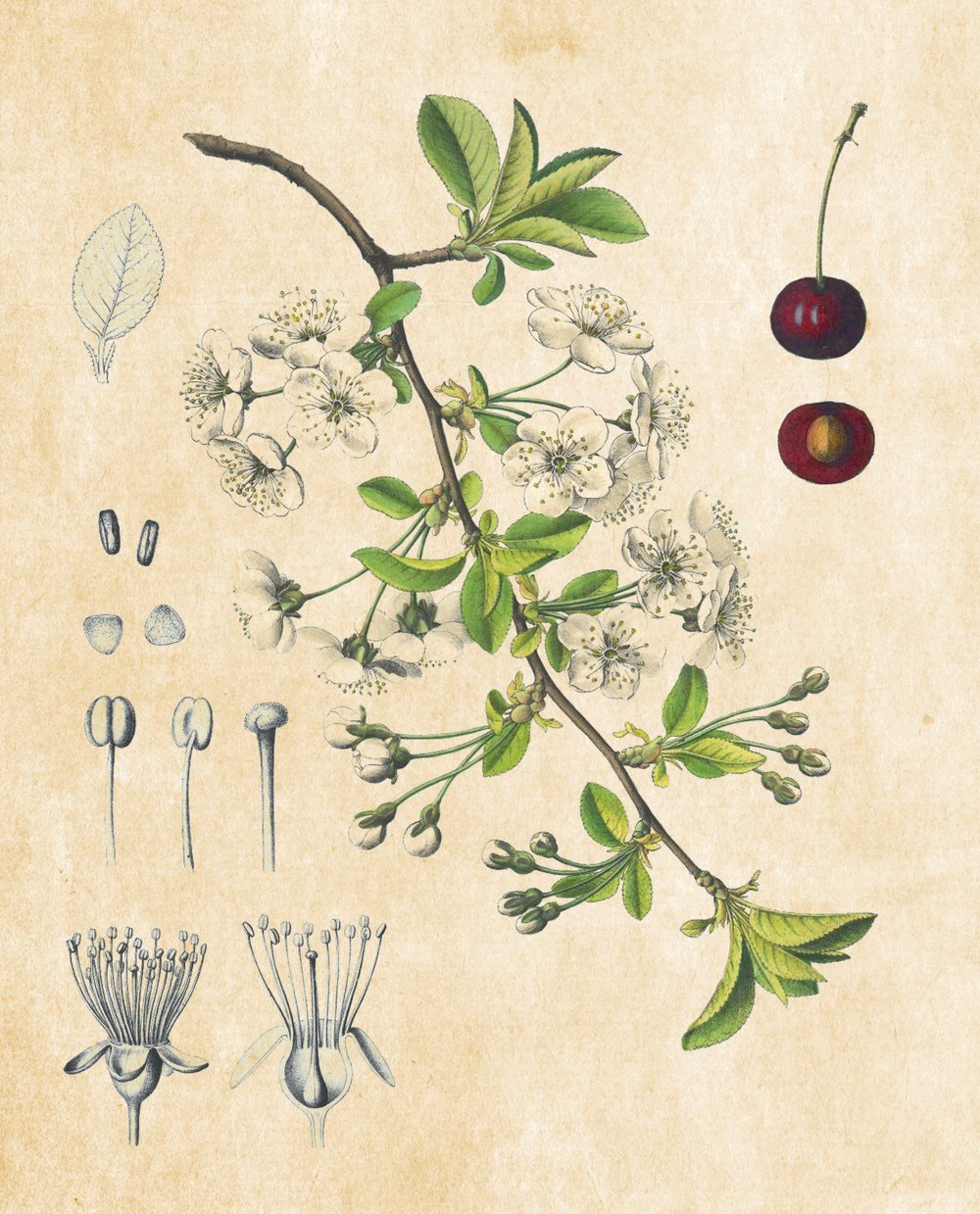
The sour cherry (visciola) is a famous variety of acid cherry, native to the regions of the Middle East and western Asia. According to historical tradition, it was the famous Roman consul Licinius Lucullus who introduced the plant to Rome in the 1st century BC; however, seeds belonging to this same botanical family have even been found in old prehistoric settlements of Central Europe.
During Roman times the sour cherry spread widely across the territories of the empire and was later used to prepare tonics and medicinal syrups in the Middle Ages. The Royal House of Savoy greatly appreciated its distinctive flavour, but its low productivity, the small size of the plant and its ability to grow on harsh, hilly ground limited its commercial spread compared with the classic sweet cherries. While sweet cherries were destined for wealthy landowners, sour cherries, of a more wild and tart character, remained available to the peasants.
Today artisanal sour-cherry jam is considered a true delicacy, as its taste is markedly superior to that of common cherries. This fruit keeps alive an ancient and precious agricultural tradition, sought after by connoisseurs.
In the Pope’s Orchard it is brought back as a historic, now-forgotten species of the Tusculan territory: grown without synthetic chemicals, with shallow roots (within 1.5 m) so as not to interfere with the archaeology below.
Cultivars present
Progressiflora · Amarena · Ciociara · Visciolo di Ancona · Nana dei Castelli Romani
Gallery