Ancient fruit
Crataegus azarolus L. · Family: Rosaceae

Widespread across the Mediterranean basin, it is a “minor” fruit: azaroles were common in past centuries, but consumption and cultivation gradually declined, so that today they are considered a rarity. The species is thought to be native to Asia Minor or the island of Crete.
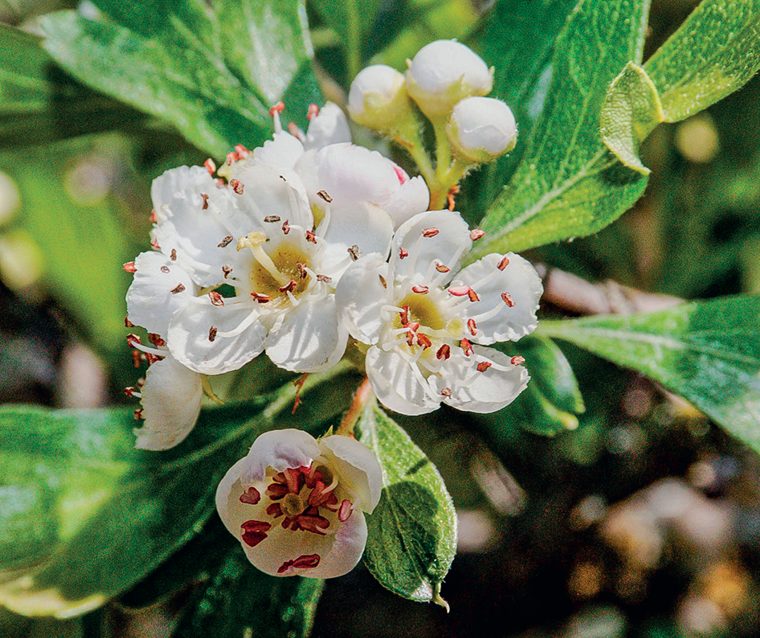
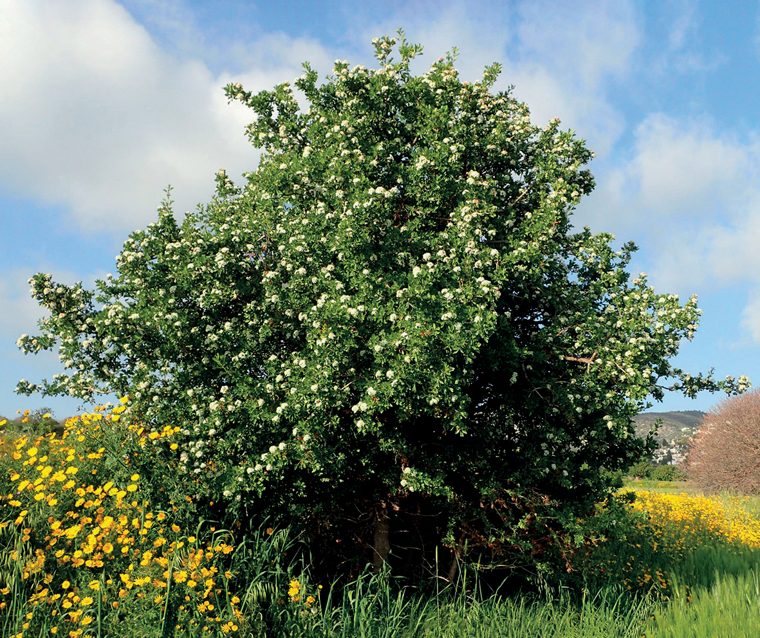
The azarole grows to a maximum height of 5 m, with thorny branches; it is a long-lived plant that can become a centenarian, slow-growing, broad-leaved and deciduous. The bright green leaves are oval and wedge-shaped. The flowers are white, arranged in clusters of 3-18, blooming from April to May.
The fruit is a small edible globe-shaped pome, amaranth red, white or yellow when ripe, with fleshy bittersweet pulp and three small seeds inside; it ripens in September. Eaten fresh, the fruits are thirst-quenching, diuretic and hypotensive, and provide an excellent supply of vitamins A and C; the pulp also has anti-anaemic properties and benefits eyesight. It is used for jams and jellies, in confectionery and preserved in spirit.
In the Pope’s Orchard it is brought back as a historic, now-forgotten species of the Tusculan territory: grown without synthetic chemicals, with shallow roots (within 1.5 m) so as not to interfere with the archaeology below.
Cultivars present
Azzeruolo
Gallery