Ancient fruit
Prunus avium (L.) L. · Family: Rosaceae
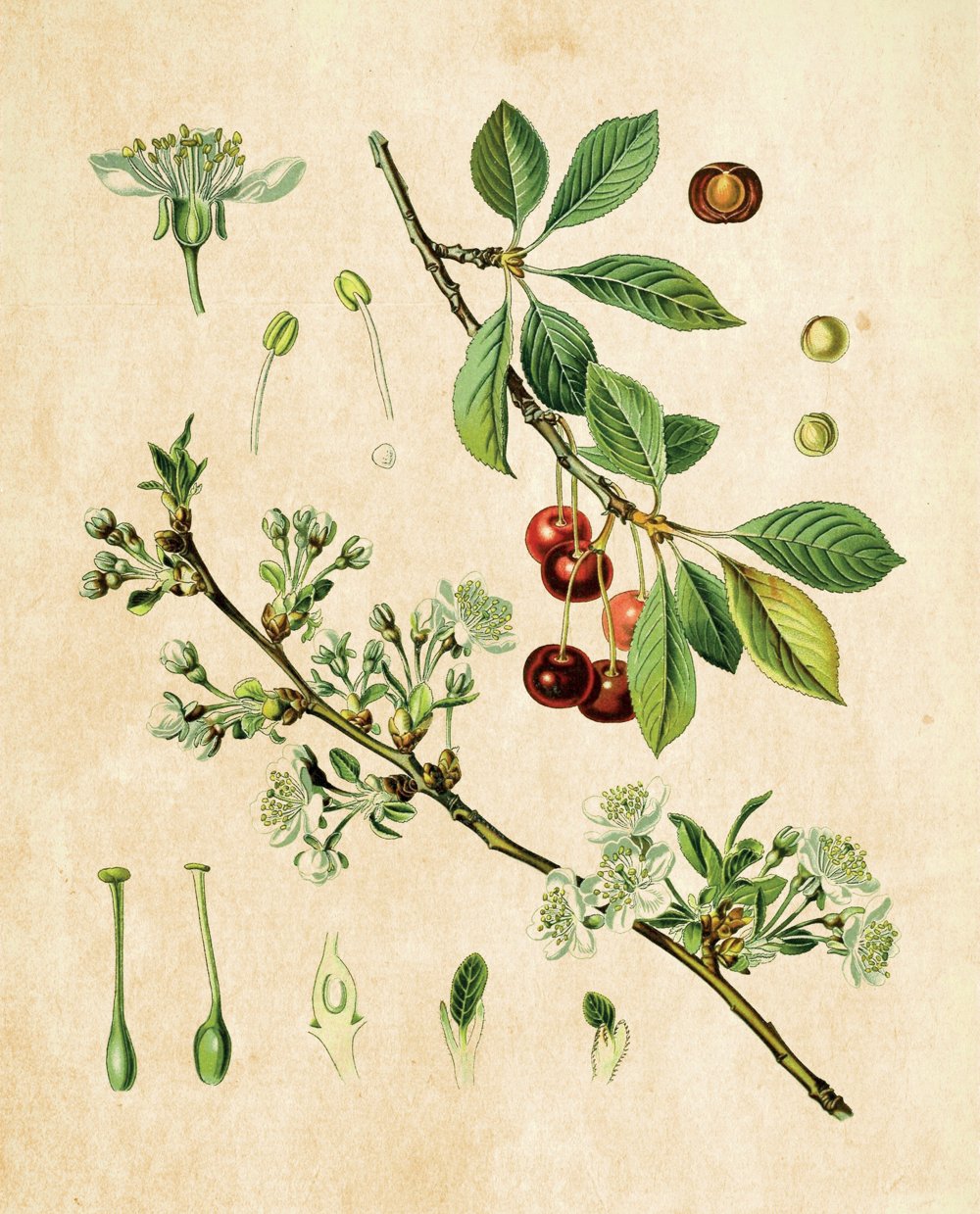
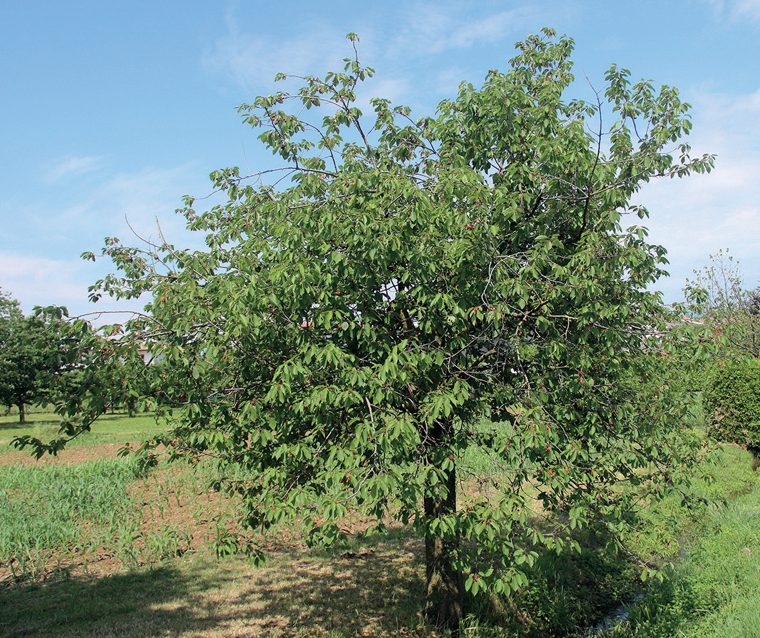
A deciduous broad-leaved tree native to Europe, Asia and North Africa, it grows between 15 and 32 m tall. With a lifespan of almost a century, it requires strong sunlight to develop. The leaves, alternate and ovoid-pointed, are simple and light or bright green on the upper side.
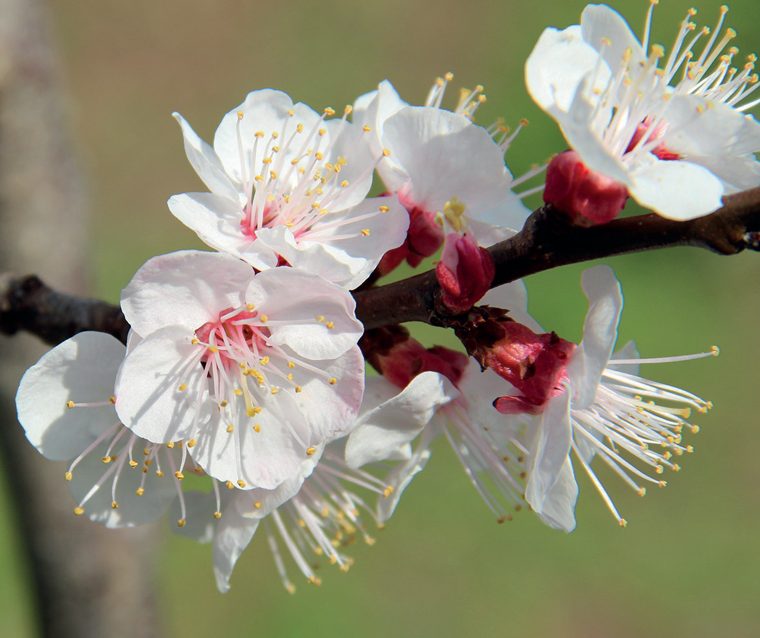
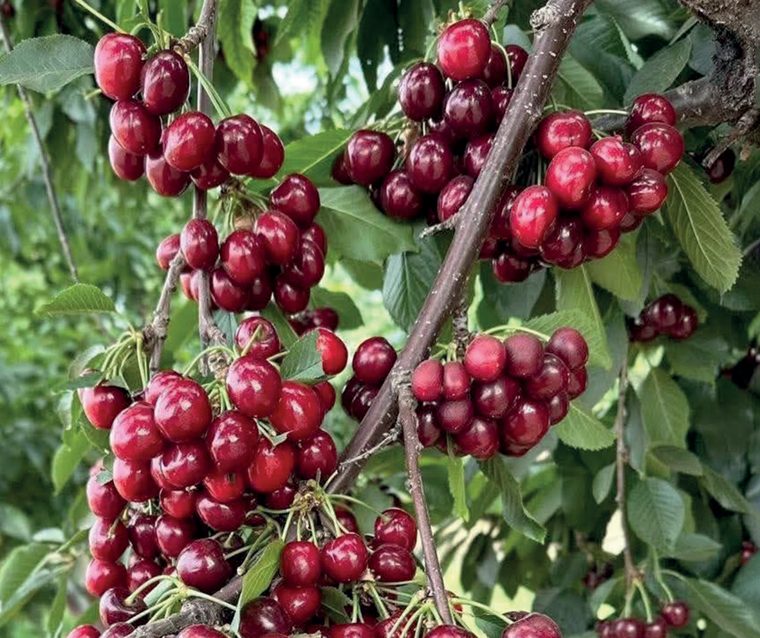
The white stalked flowers are arranged in corymbs of two to six, each hanging on a peduncle with five white petals, and are pollinated by bees; flowering takes place in early spring. The fruit is a fleshy drupe (the cherry), bright red or dark purple when ripe, sweet, astringent or bitter in taste, enclosing a single stone and ripening in June.
The timber of this tree is prized and much sought after by furniture makers. The wild cherry has been a source of food for humankind for thousands of years; derived from the wild type, the sweet cherry is cultivated worldwide for its fruit. Several varieties are now naturalised in temperate areas such as Japan, where the species is used as a flowering, ornamental plant.
In the Pope’s Orchard it is brought back as a historic, now-forgotten species of the Tusculan territory: grown without synthetic chemicals, with shallow roots (within 1.5 m) so as not to interfere with the archaeology below.
Cultivars present
Ravenna tardiva · Ferrovia · Graffione · Lapins · Van · Imperiale di Caserta
Gallery