Ancient fruit
Malus domestica Baumg. · Family: Rosaceae
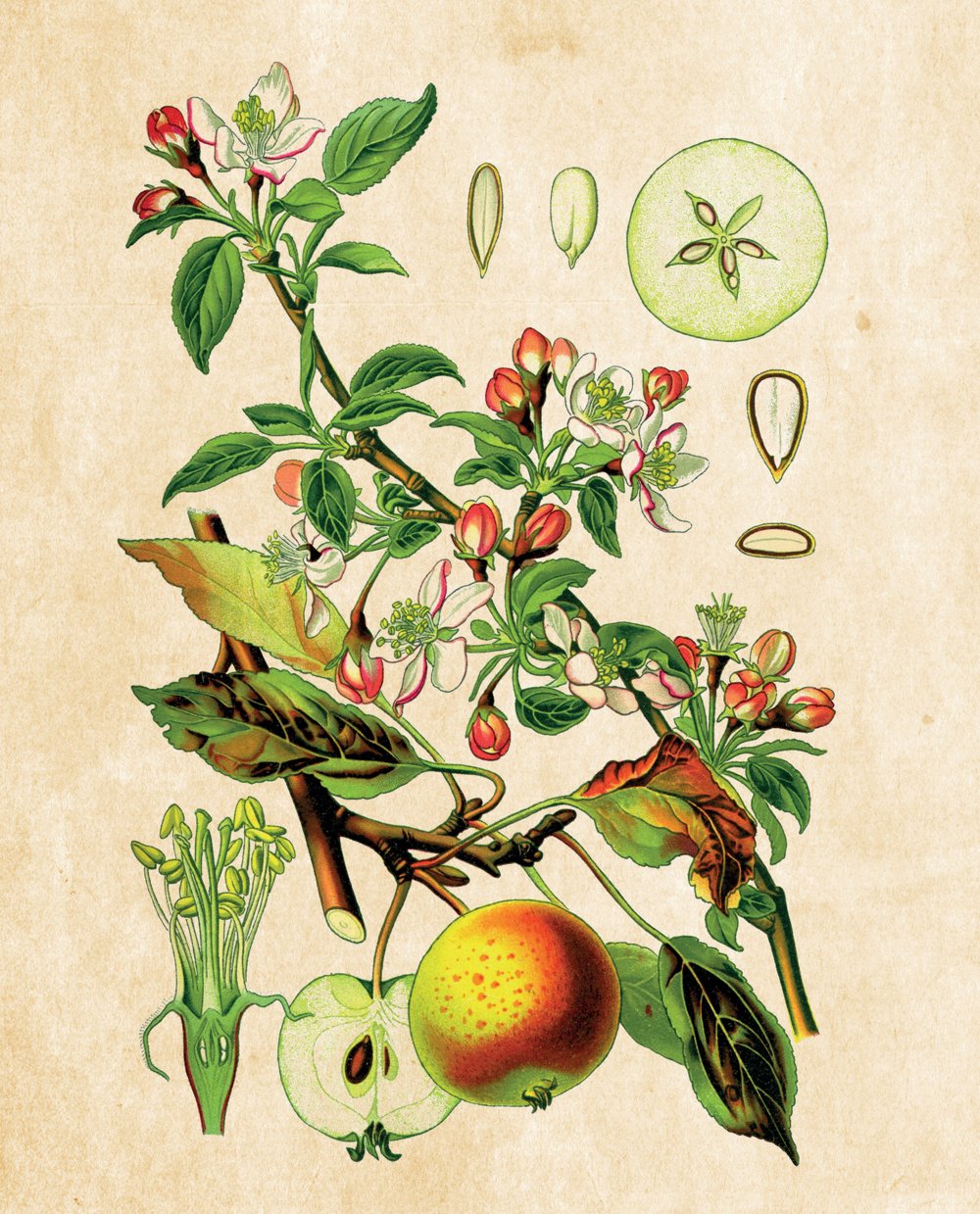
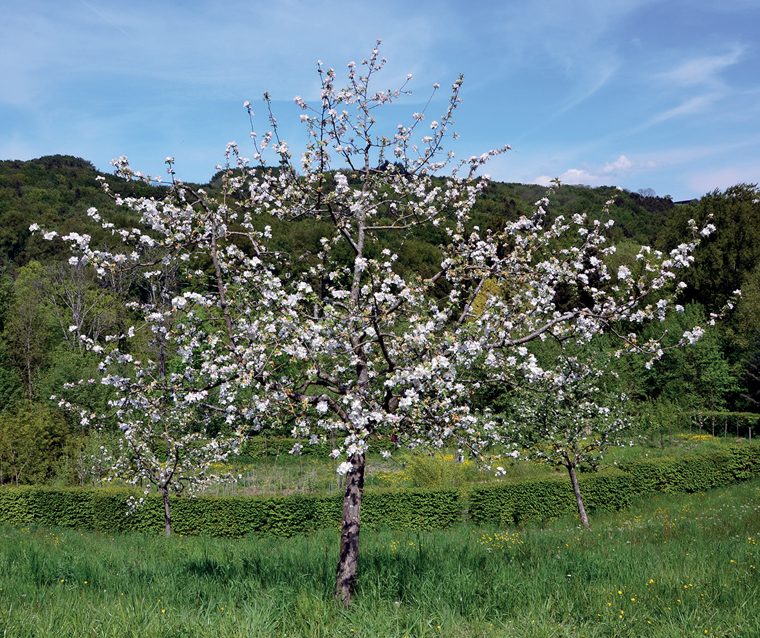
The centre of origin of the wild apple Malus sylvestris, ancestor of the cultivated apple, appears to be Kazakhstan. This species is the mother of all apples, with origins lost in time: a small deciduous tree of 3-10 m, with a spreading crown and shallow roots. The leaves are alternate and simple, with an oval blade, slightly serrated, with a pointed tip and rounded base.
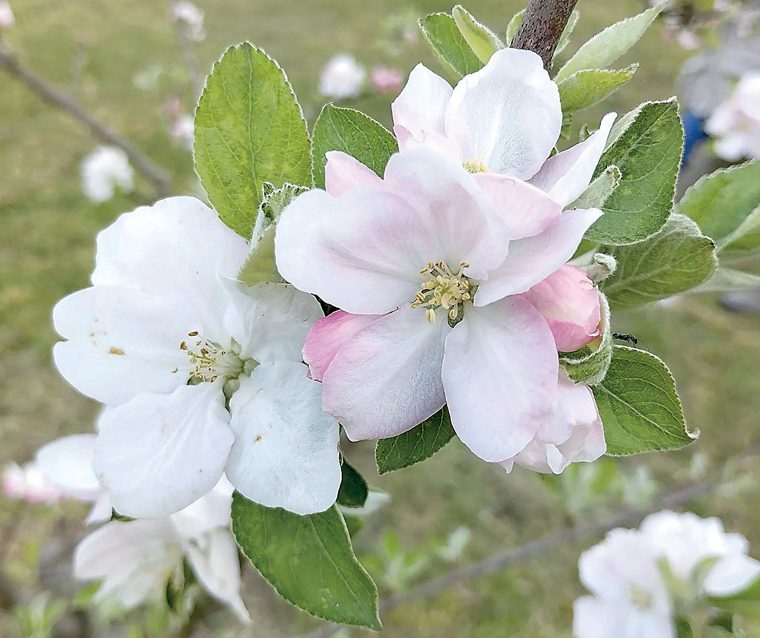
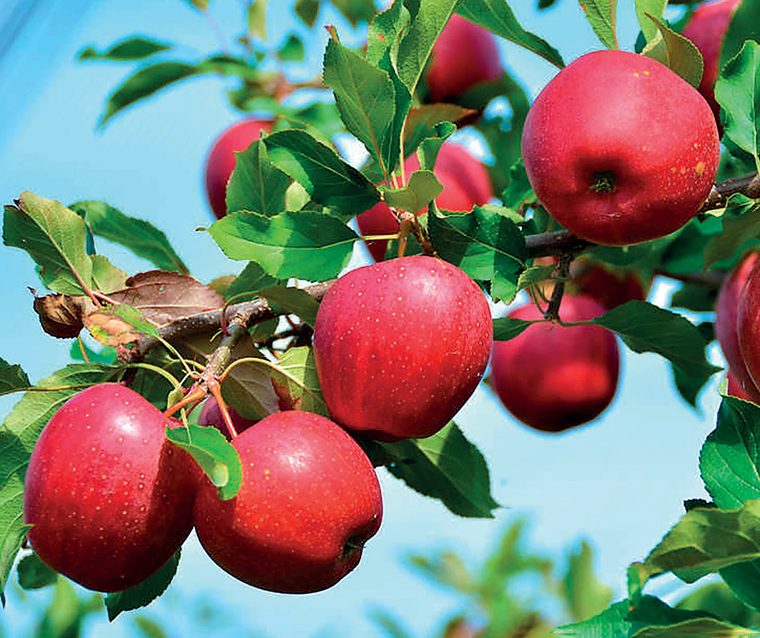
The flowers are hermaphrodite, white-pink outside and white inside, with a corolla of 5 petals; they are gathered in corymb clusters of 3-7, blooming in spring with insect pollination. The fruit, called pome or apple, forms by the enlargement of the floral receptacle together with the ovary and is therefore a false fruit; it is globe-shaped, first green and then, ripening in summer-autumn, varying from yellow-green to red. The true fruit, derived from the ovary, is actually the core.
It tolerates cold very well and, with a few exceptions, can withstand temperatures down to -25 °C. It can be grown anywhere, but prefers a cool climate, humus-rich soil and altitudes between 600 and 1000 m; the plant fears drought.
In the Pope’s Orchard it is brought back as a historic, now-forgotten species of the Tusculan territory: grown without synthetic chemicals, with shallow roots (within 1.5 m) so as not to interfere with the archaeology below.
Cultivars present
Cerina o Zitella · Annurca · Abbondanza rossa · Citronella · Starking · Imperatore
Gallery