Ancient fruit
Corylus avellana L. · Family: Betulaceae

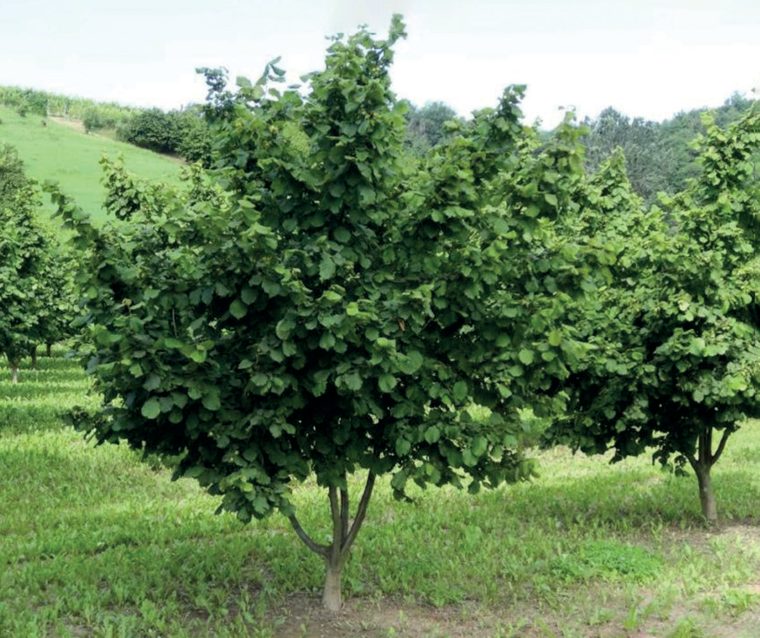
The genus name derives from the Greek word for “helmet”, or from kurl, the Celtic name of the plant, while the specific epithet comes from the town of Avella, known since antiquity for its cultivation. The plant has a bushy or tree-like habit, 2 to 4 m tall; it has simple, heart-shaped leaves with a toothed margin, deciduous and broad-leaved, fast-growing. The inflorescences are unisexual: the male ones in pendulous autumn catkins, the female ones resembling a small bud.
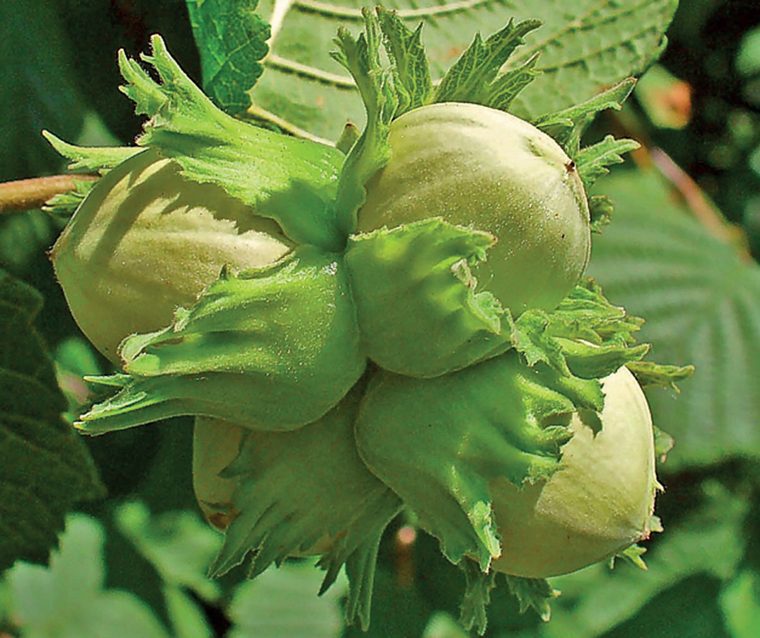
The fruit (hazelnut) is wrapped in bracts from which it frees itself at ripening and falls. It is edible and used raw, cooked or ground; rich in an oil used in food and the cosmetics industry. Hazel wood is flexible, elastic and light, used since antiquity to make baskets and fences.
The natural range of this plant extends mainly across the European-Caucasian region, with a marked distribution throughout hilly areas. In this productive context Italy plays a leading role, ranking as the world’s second-largest producer of hazelnuts, surpassed only by Turkey.
In the Pope’s Orchard it is brought back as a historic, now-forgotten species of the Tusculan territory: grown without synthetic chemicals, with shallow roots (within 1.5 m) so as not to interfere with the archaeology below.
Cultivars present
Tonda di Romagna · San Giovanni
Gallery