Ancient fruit
Morus alba L. · Morus nigra L. · Family: Moraceae
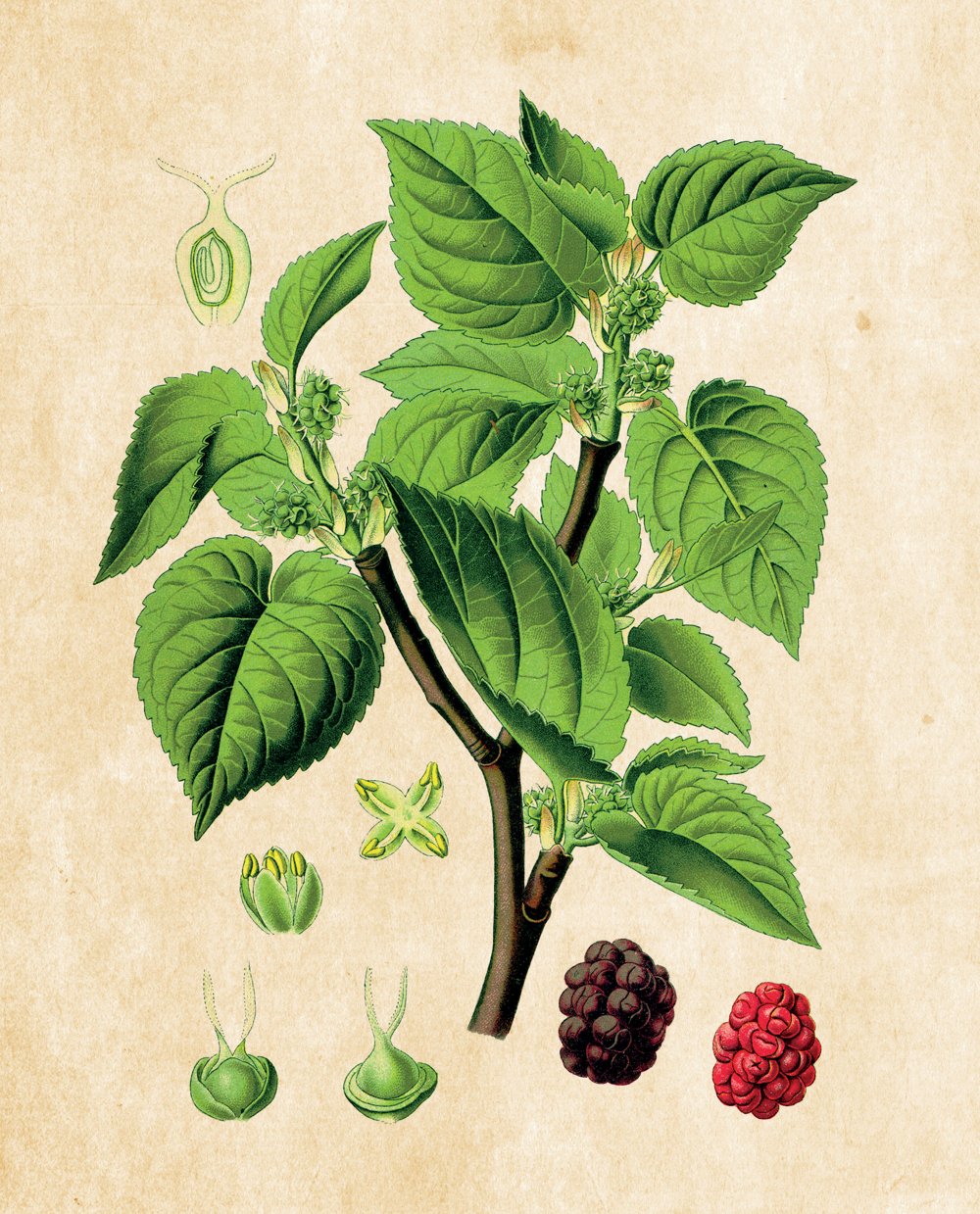
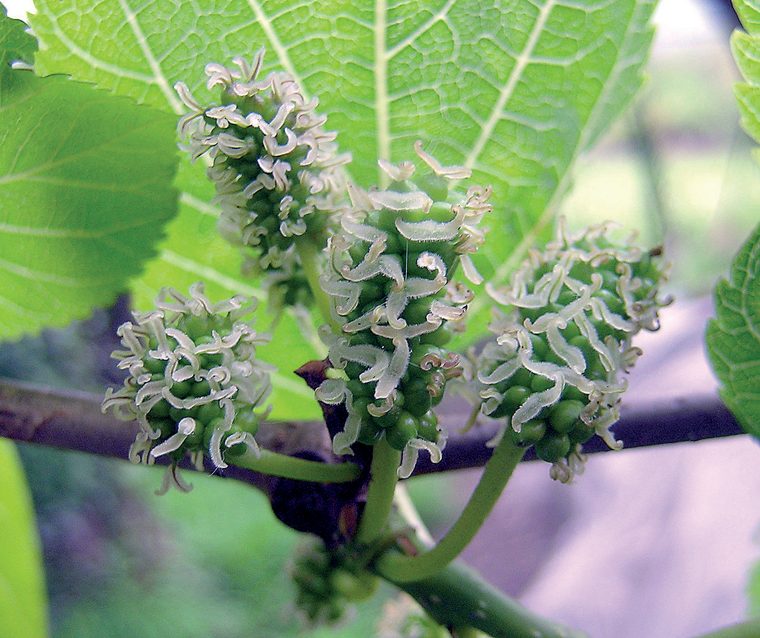
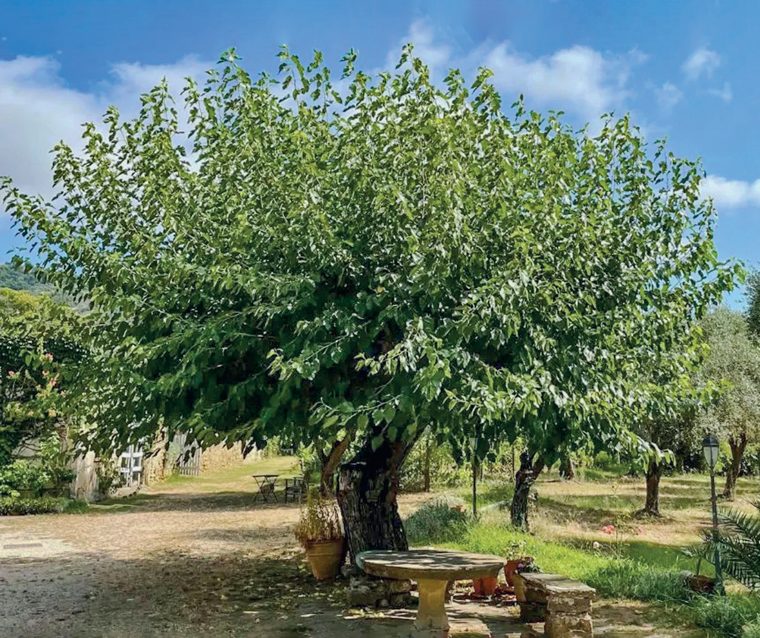
The genus Morus comprises medium-sized fruit trees and shrubs, commonly known as mulberries. Native to the temperate regions of Asia, it has spread successfully to Africa and North America too. Its leaves are alternate, with a typical oval shape. In Italy and the rest of Europe the best-known species are the white mulberry (Morus alba L.) and the black mulberry (Morus nigra L.), alongside other varieties native to different parts of the world.
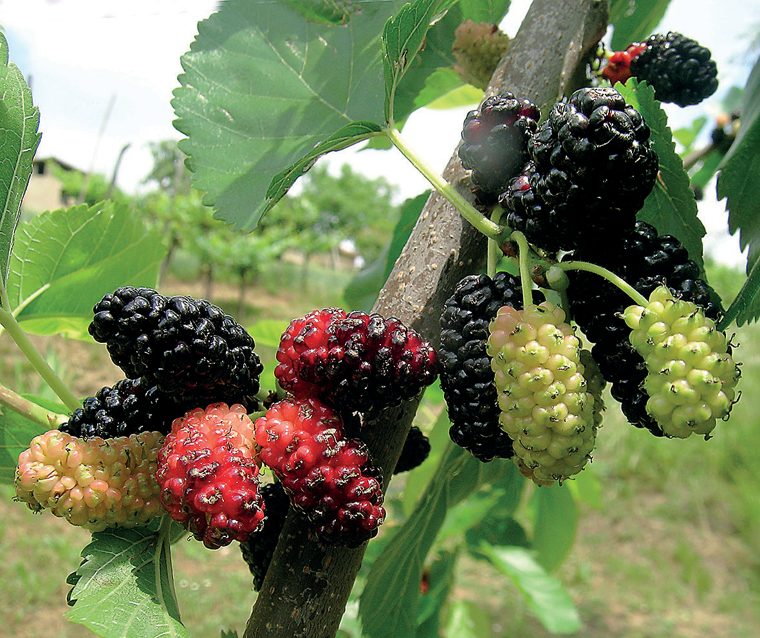
What we commonly consider the mulberry fruit is a fleshy infructescence called a sorosis, formed by the union of many small fruits each produced by a flower. These mulberries can be black, white or red, and are entirely edible; among the most famous culinary uses is the celebrated Sicilian granita. Aromatic essential oils are also extracted from the fruit.
The leaves, especially those of the white mulberry, play a crucial role in silkworm farming, as they are the only essential staple food for raising silkworms. The plant is also valued for its wood, easy to work and excellent to burn, while its branches provide poles and wicker for baskets.
In the Pope’s Orchard it is brought back as a historic, now-forgotten species of the Tusculan territory: grown without synthetic chemicals, with shallow roots (within 1.5 m) so as not to interfere with the archaeology below.
Cultivars present
Regina · Nero · Rosso · Bianco
Gallery