Ancient fruit
Pyrus communis Thunb. · Family: Rosaceae
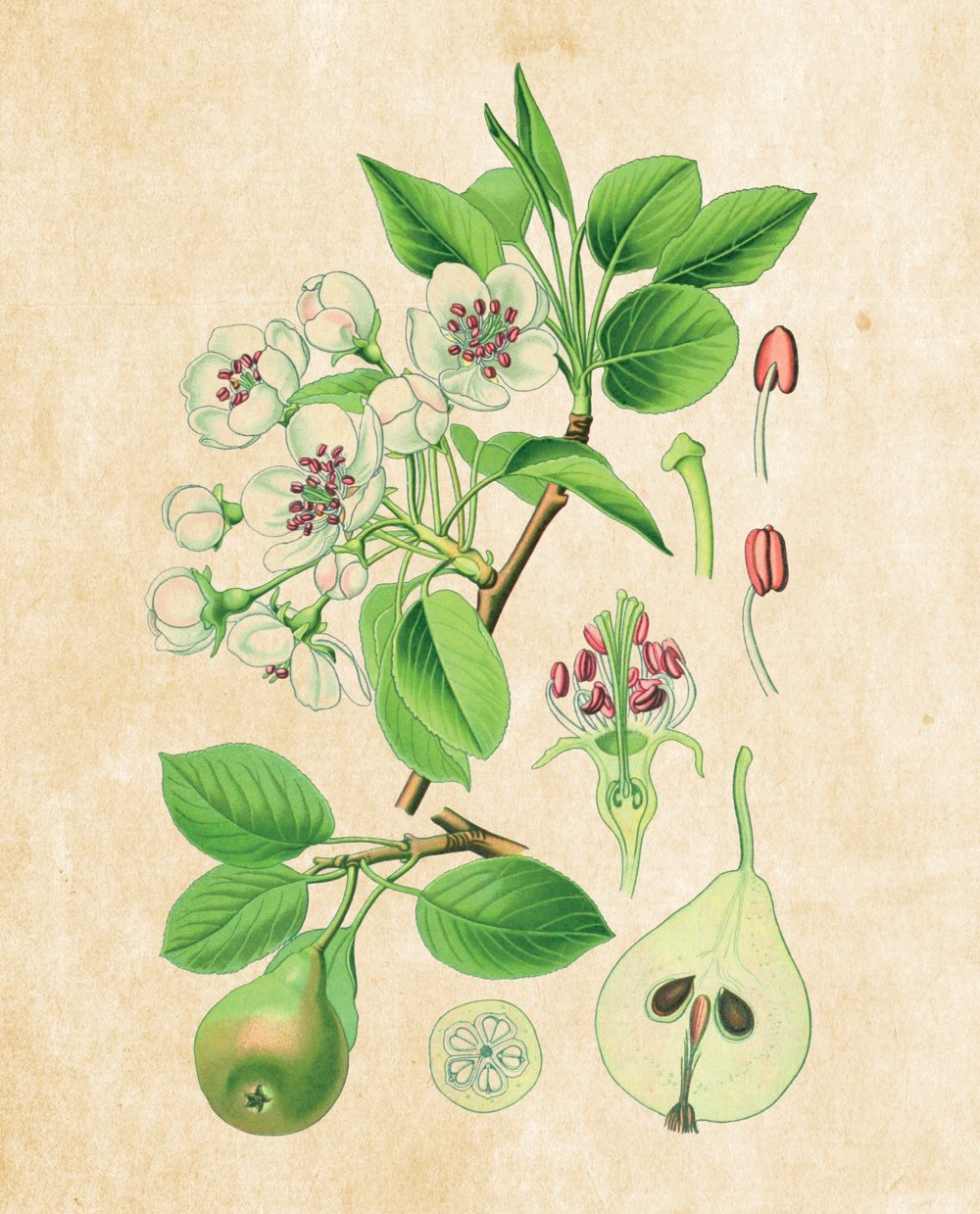
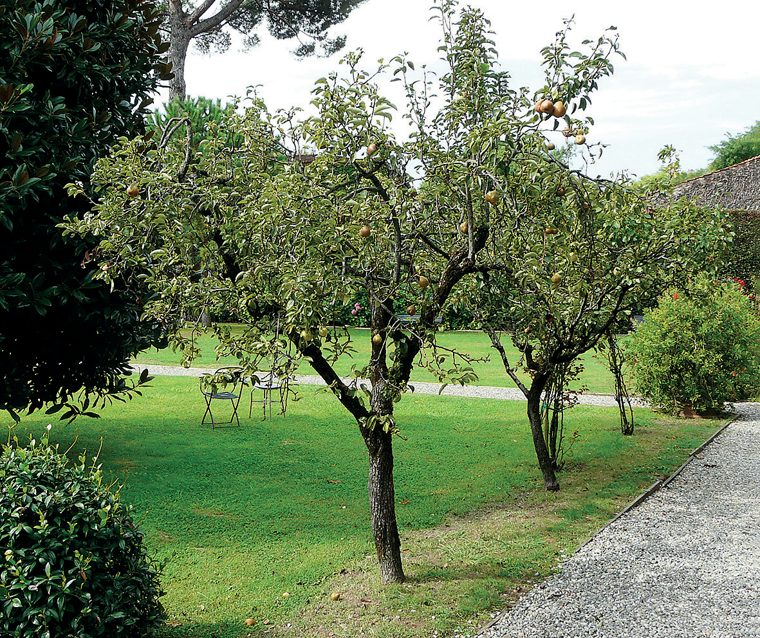
The genus includes tree and shrub species with delicate, variously coloured blossom. It is a medium-sized tree, reaching 17 m; most Pyrus are deciduous, except two species found in Asia, which are evergreen. The leaves are on average 2-12 cm long, with a glossy green colour in some species and a silvery-hairy surface in others; their shape ranges from the classic oval to the narrower lanceolate.
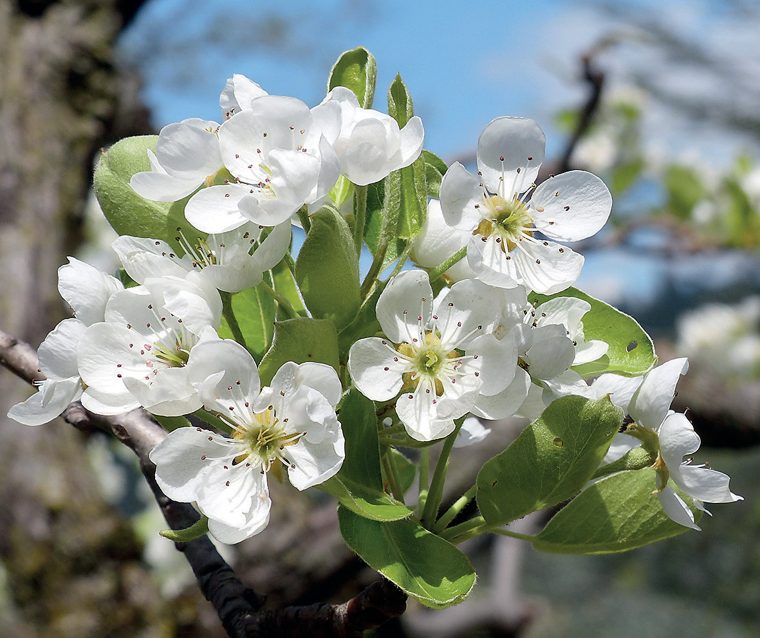
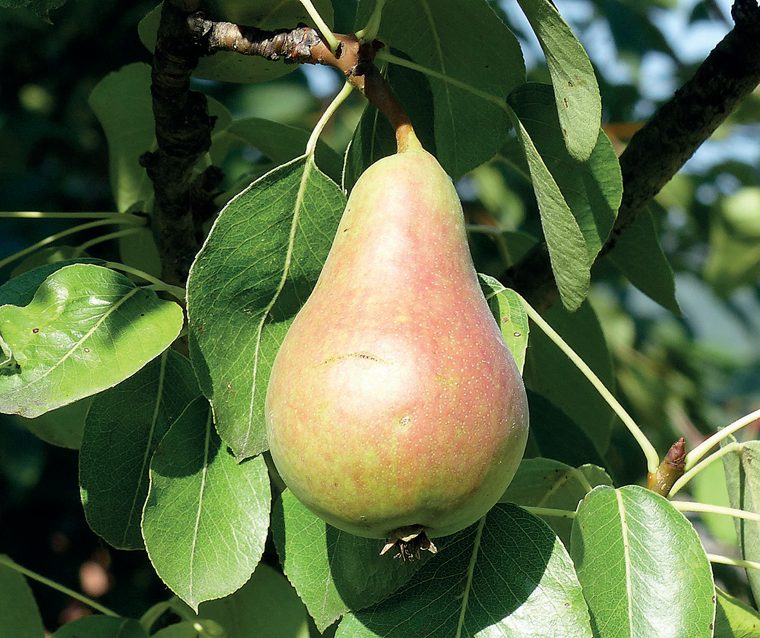
The flowers are 2-4 cm in diameter, have five petals and show colours from white to yellow or pink, sometimes lightly tinted; they bloom between April and May, reaching up to an altitude of 1000 m. The fruit is called a pear and has the typical pyriform shape, with a rounded, broader base and a narrower upper part near the stalk; the final size varies according to the variety.
Pears are native to temperate regions, in a wide range extending from western Europe and North Africa to eastern Asia. Most species tolerate cold very well and easily withstand the harshest winter climates.
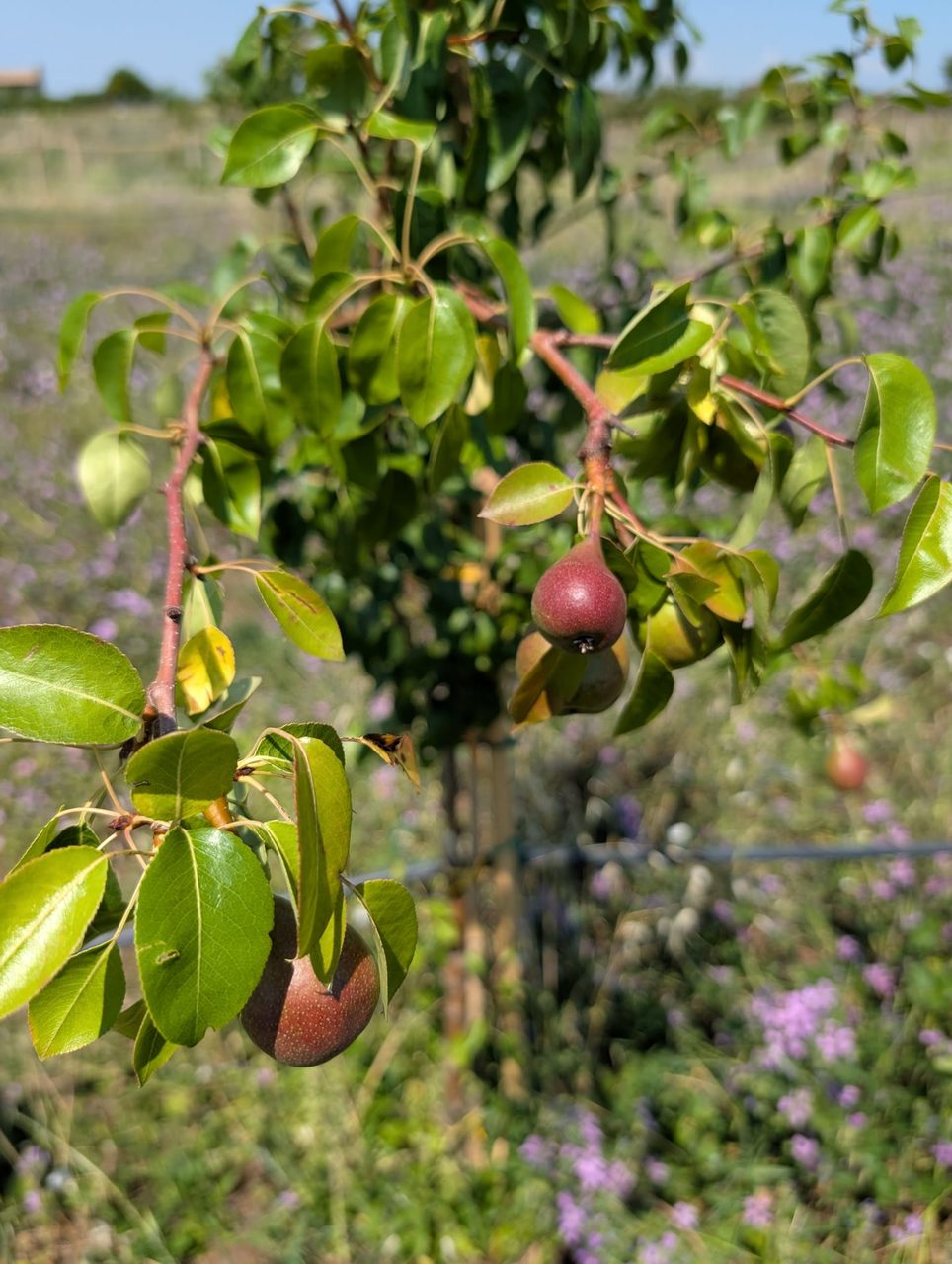
In the Pope’s Orchard it is brought back as a historic, now-forgotten species of the Tusculan territory: grown without synthetic chemicals, with shallow roots (within 1.5 m) so as not to interfere with the archaeology below.
Cultivars present
Santa Maria · William · Abate · Passa Crassana · William rossa · Angelica · Abate Fetel · Spadona
Gallery