📍 Monte Porzio Catone (RM)📍 Monte Porzio Catone (Rome) ✉️ ilpomariodelpapa@gmail.com✉️ ilpomariodelpapa@gmail.com

Green theatre & gardens

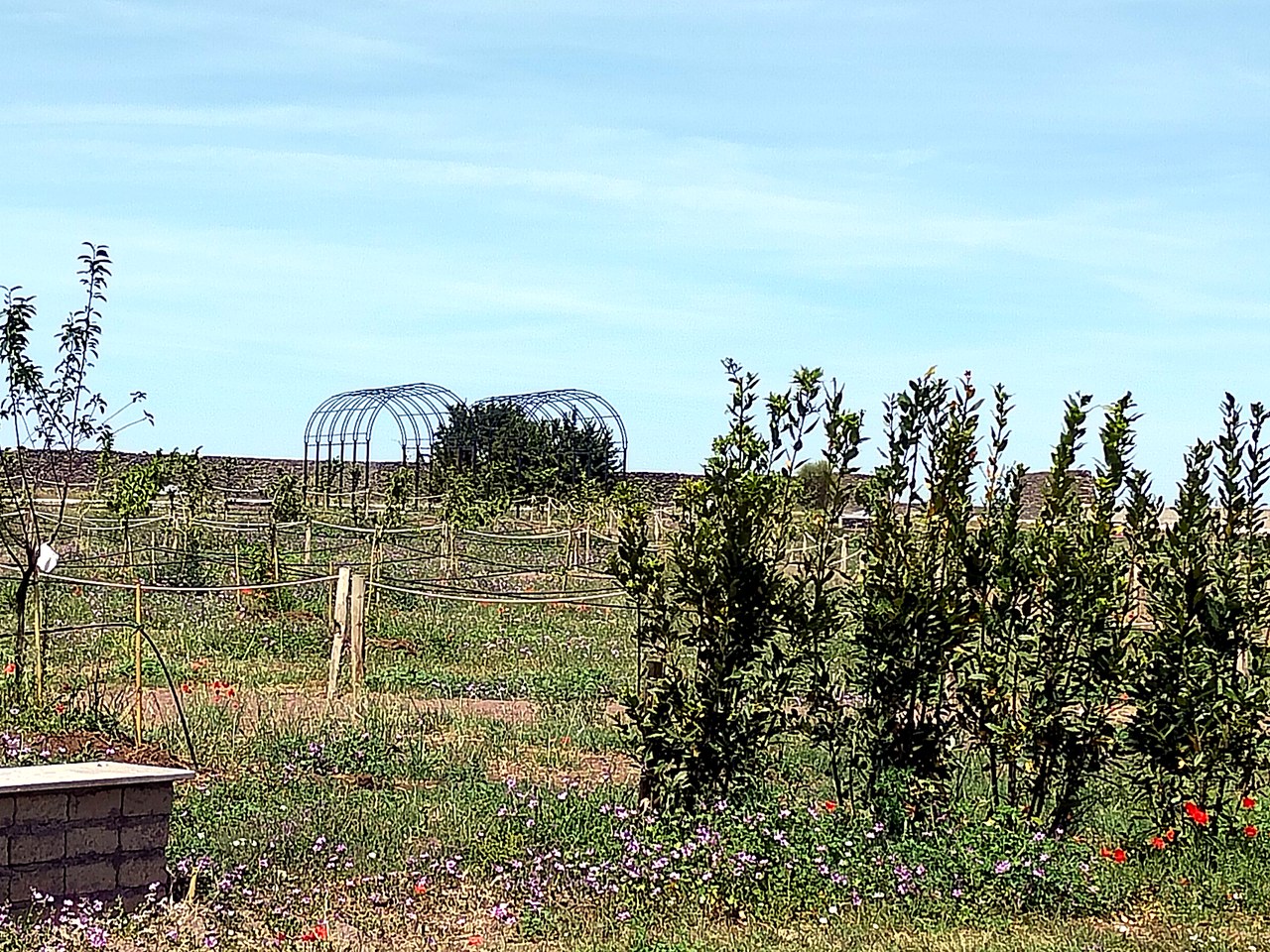
Beyond the orchard, the Barco’s garden is made up of a series of signature features that broadly recall the four typical components of the medieval monastic garden: the hortus, the pomarium, the viridarium (the ornamental flower garden, with the rose as protagonist) and the herbularius (here evoked by the flowering meadow).

The idea also recalls the evolution of the hortus conclusus into the Renaissance garden, marked by a monumental design — the primary axis with the fountain at its centre, a synthesis of the secular and religious symbols of both conceptions.

The components

The signature gardens

Six features weaving together historical memory, scenography and biodiversity.

Teatro di verzura
Scenography

Green theatre

A laurel hedge is the protagonist of the stage set: a “green theatre” at the centre of one of the inner paths, serving as a space for low-impact events or a gathering point. A feature perhaps foreign to this kind of garden, a quotation referring to “higher” examples of Renaissance villas, such as the Garden of Pojega in Negrar.

Full page →
I berceaux con rose e rampicanti
Hooped arbours

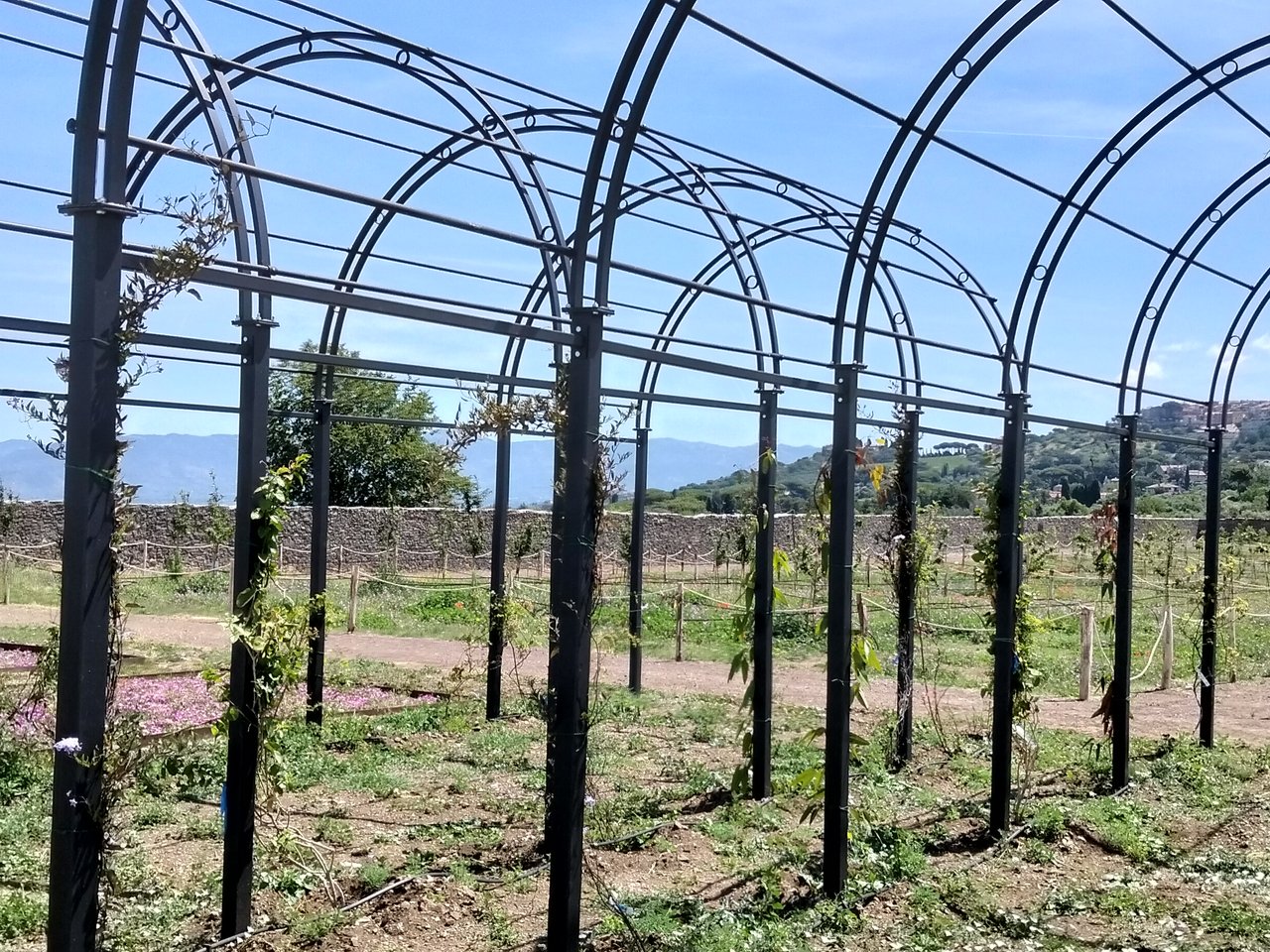
Berceaux / “hooped arbours”

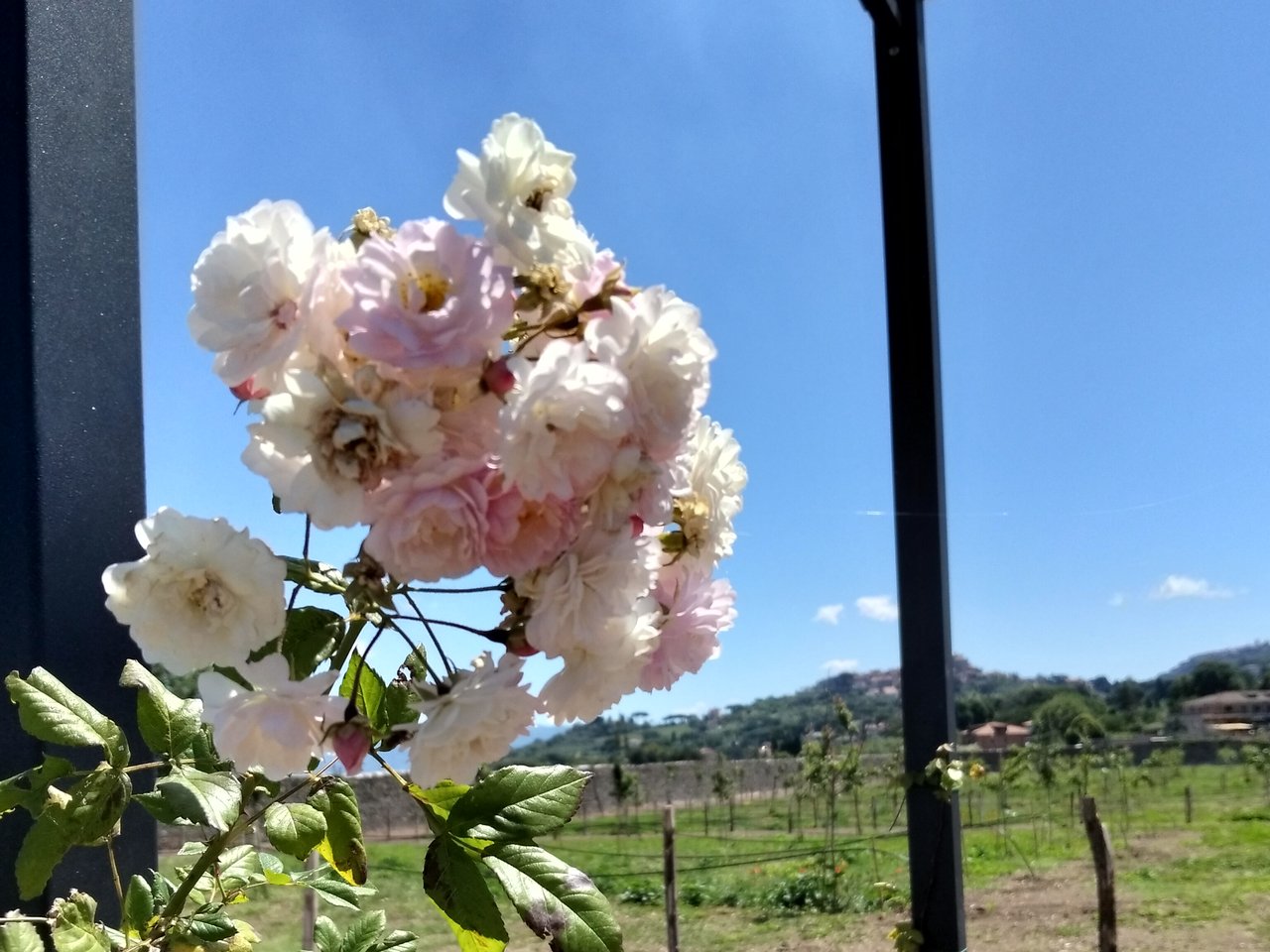
Light arbours that reproduce the shape of the vaulted chambers below, placed over the ancient walls. They host roses and climbers — Bignonia, Clematis, Lonicera, Passiflora, Rosa, Vitis.

Full page →
Orti sospesi
Hortus

Hanging gardens

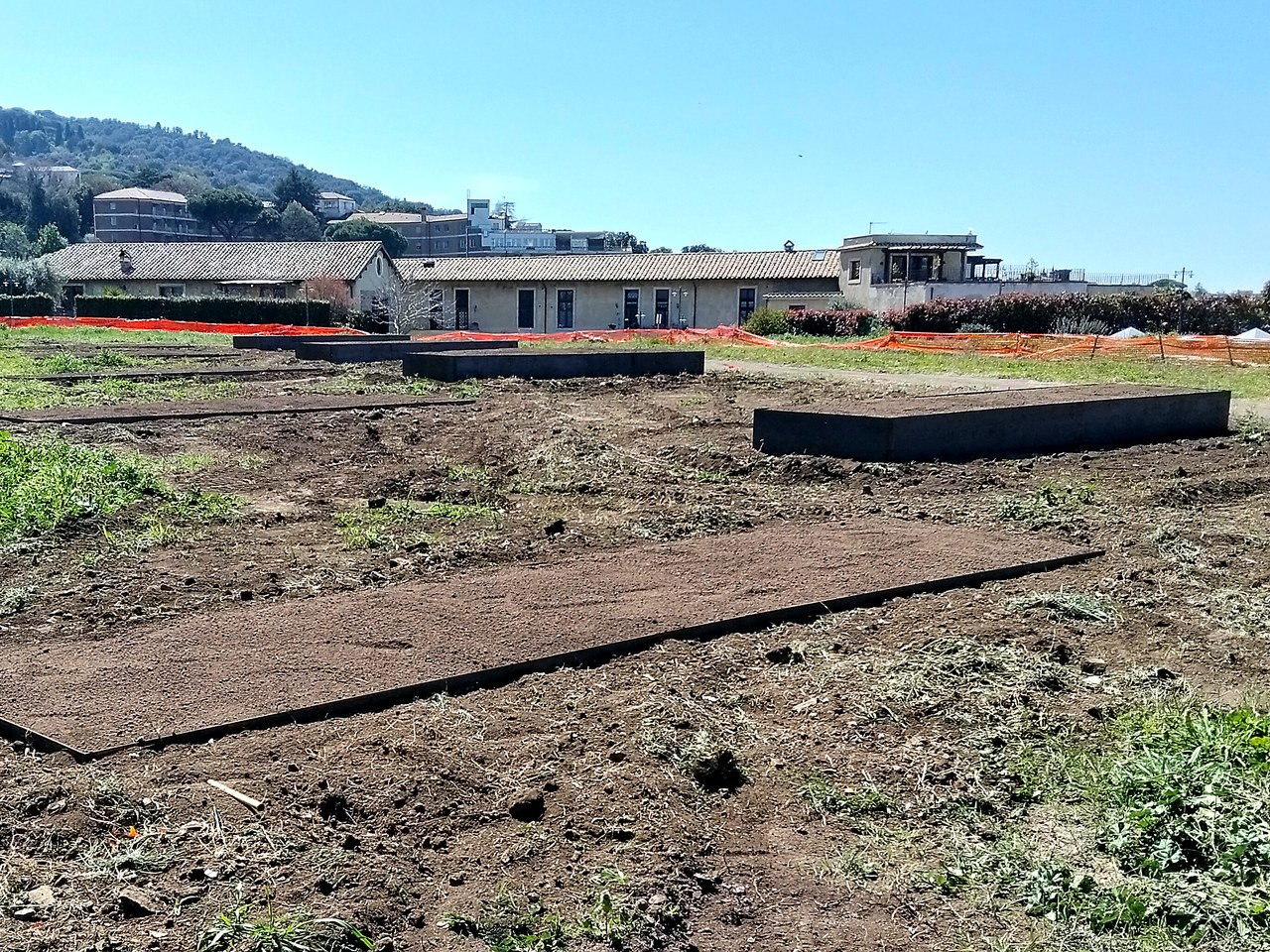
In the south-western end of the Barco, where the tree mass thins out, there is an area dedicated to the hanging gardens, recalling the utilitarian component of the monastic garden, the hortus.

Full page →
Il prato fiorito per insetti pronubi
Biodiversity

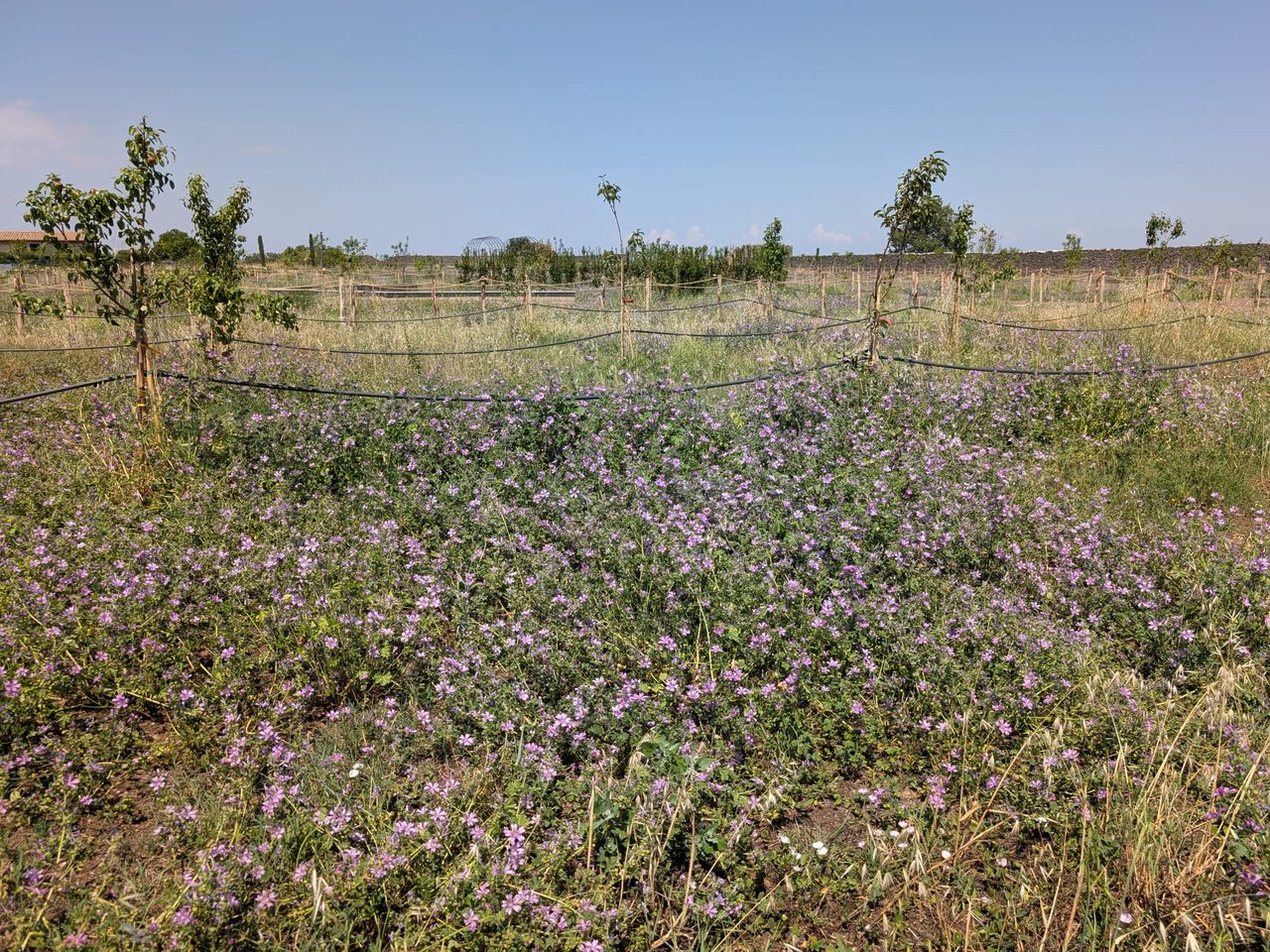
Flowering meadow

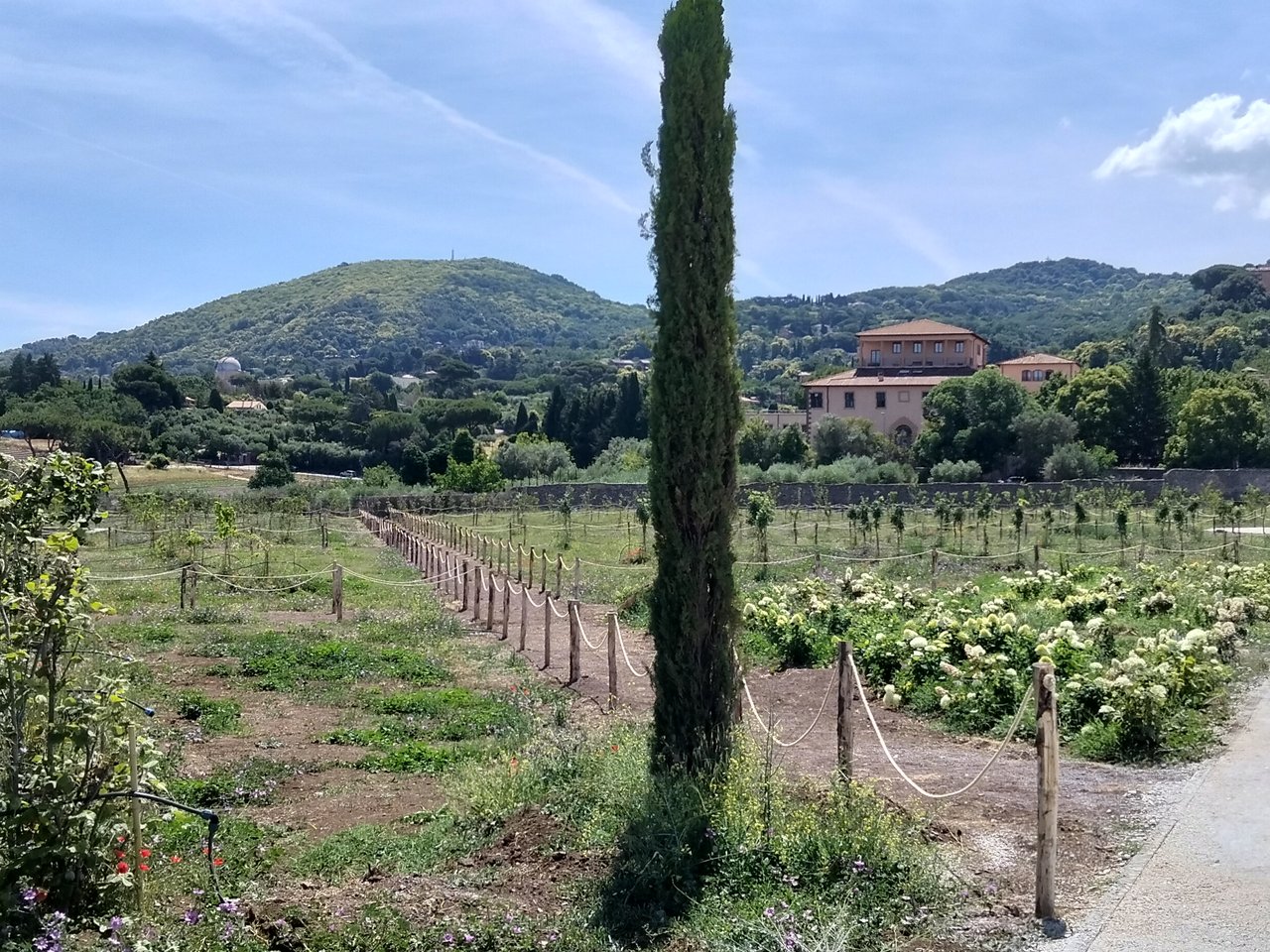
A clearing left as a flowering meadow, favouring pollinating insects (bees, bumblebees) and increasing biodiversity. From late winter to early summer it offers a succession of spontaneous blooms of great chromatic effect; mowing takes place only after seed dispersal, so the flowers can complete their biological cycle.

Full page →
Giardino fiorito
Viridarium

Flower garden

The central area hosts flowering shrub species of the genera Hydrangea and Rosa, of great chromatic effect: it is the viridarium, the ornamental flower garden of the monastic tradition, with the rose as protagonist.

Full page →
L'asse centrale con i cipressi
Central axis

The cypresses of the central axis

To recall the avenue leading to Mondragone, planted with cypresses in the 18th century, four pairs of cypresses have been placed at the key points of the central path: a “quotation” of great territorial impact. The axis is surfaced with pale gravel, visible even from afar.

A living laboratory

The garden as an agro-ecosystem

The planting of about 1,000 specimens of woody trees (fruit trees, cypresses and holm-oak shrubs), shrubs and climbers makes a significant contribution to reducing CO₂ and, above all, to increasing biodiversity — not only of plants but also of animals, with a strong rise in species useful to the garden in their various trophic roles, from controlling diseases and pests to pollination.

The complete elimination of synthetic chemicals for fertilisation — replaced by natural microbial biostimulants — causes no alteration or pollution of soil, water and air. Irrigation is for emergency support only, to sustain the plants during periods of peak drought, aided by water-retaining agents that reduce water consumption.

An agro-ecosystem with numerous plant species able to provide ecological niches for organisms, pursuing the garden’s maximum biological diversification.