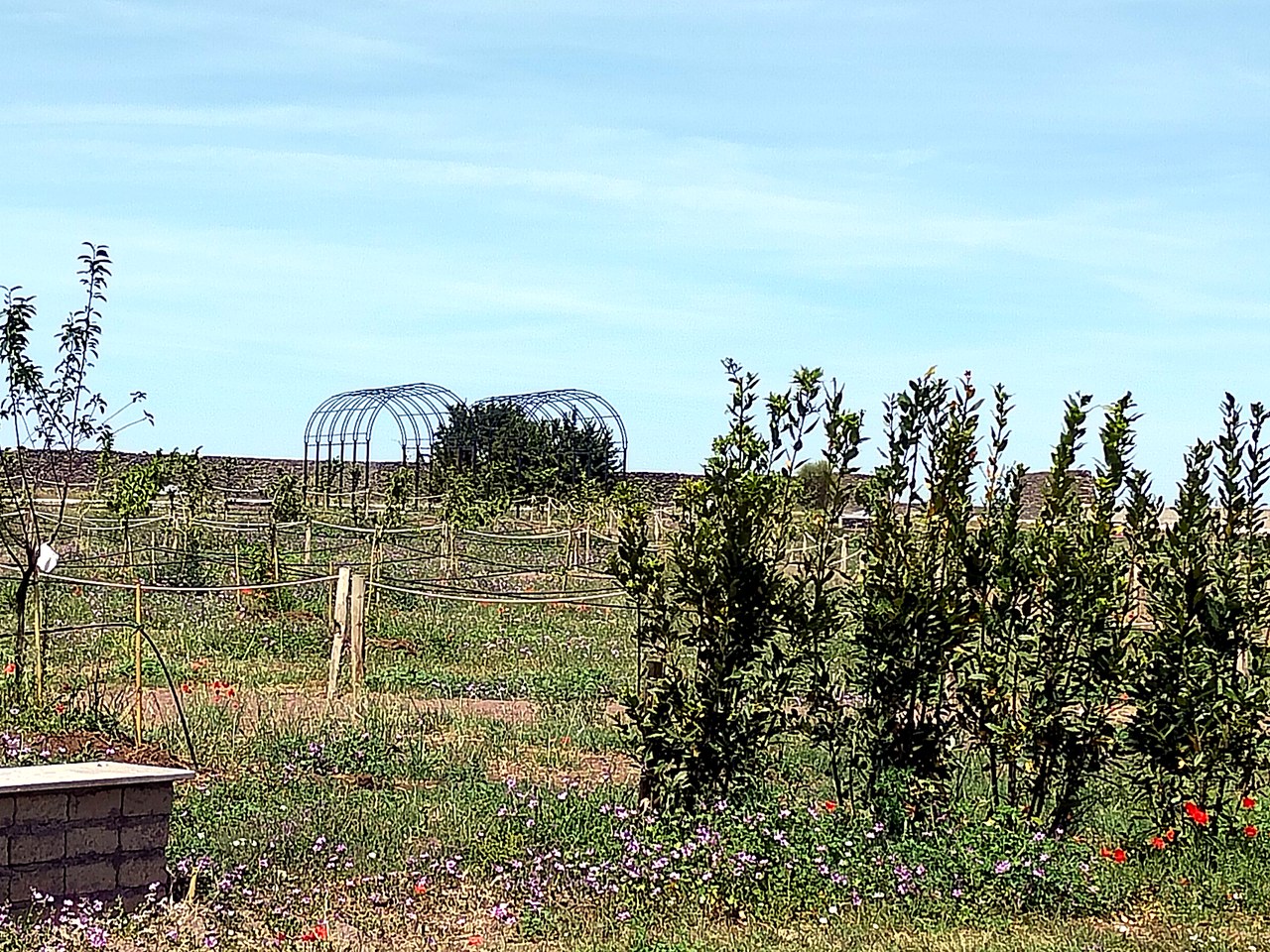
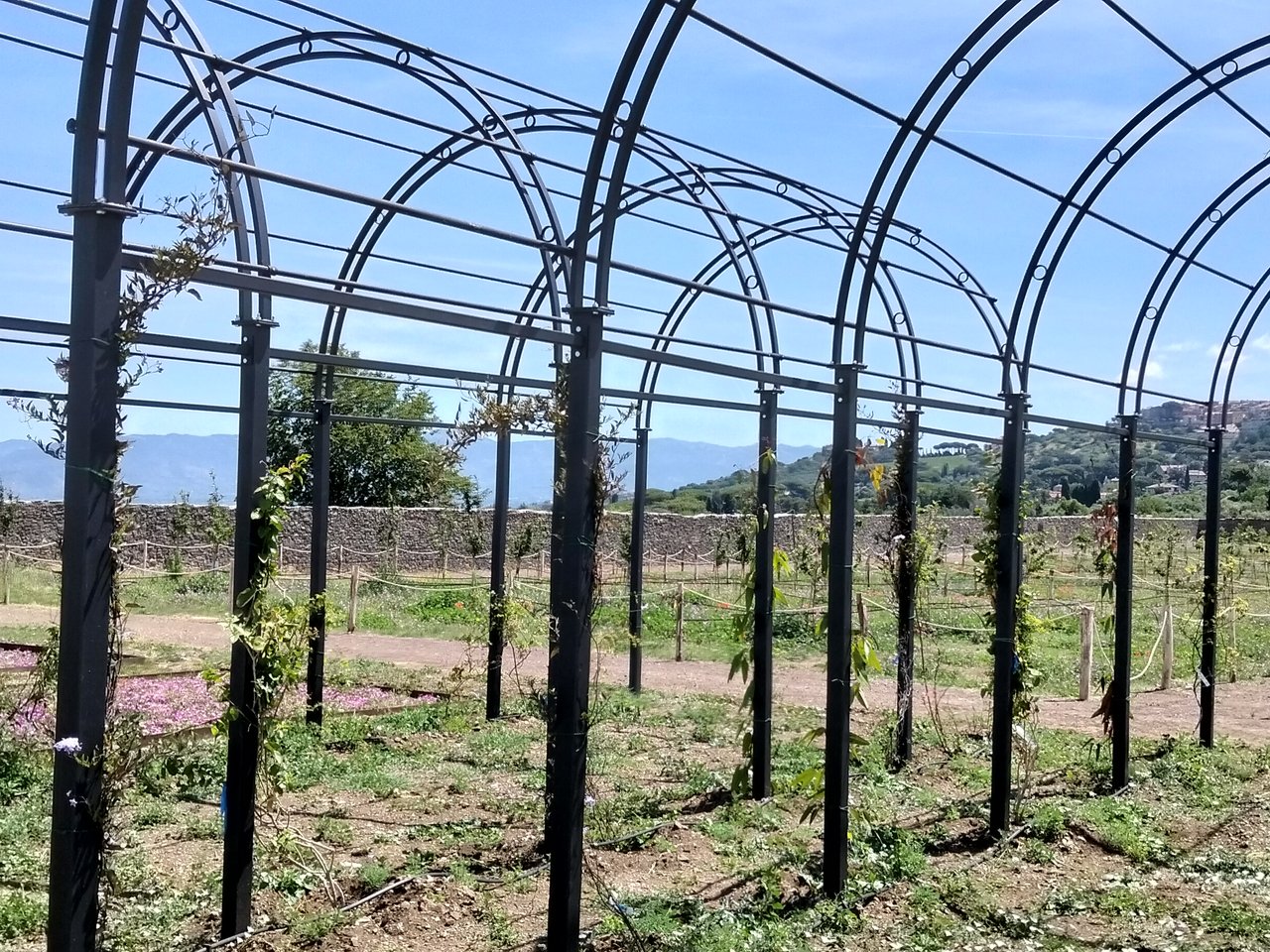
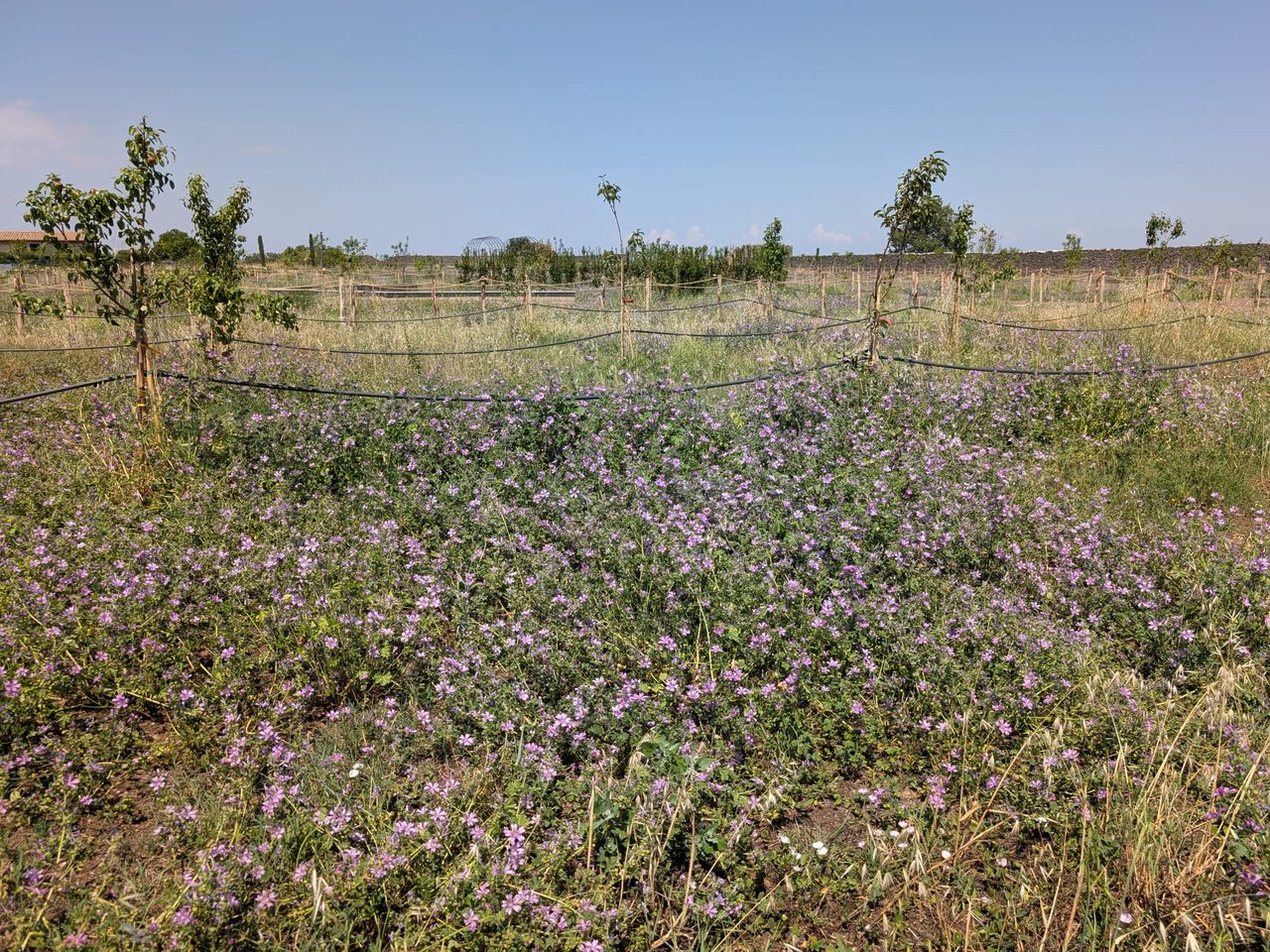
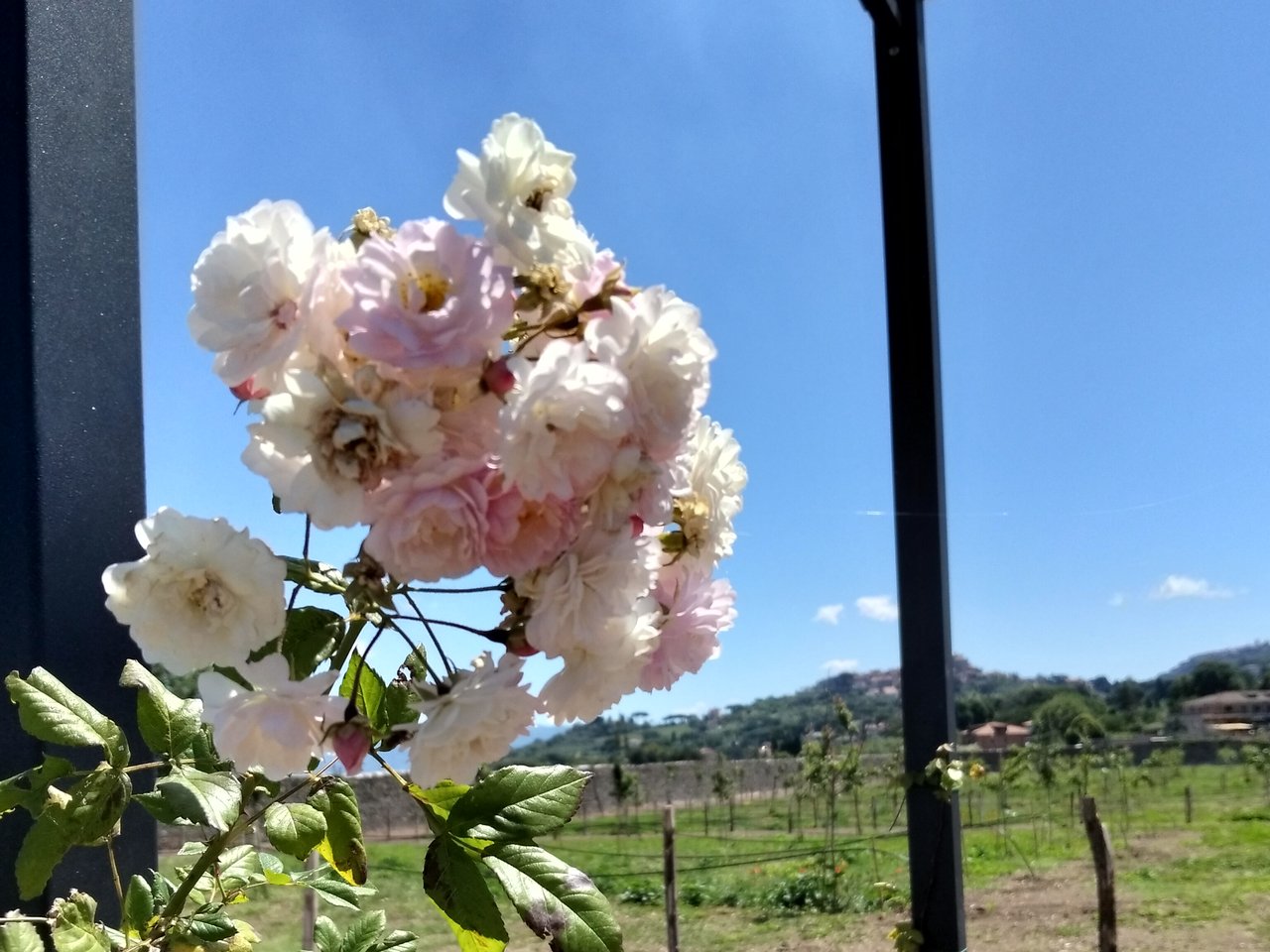
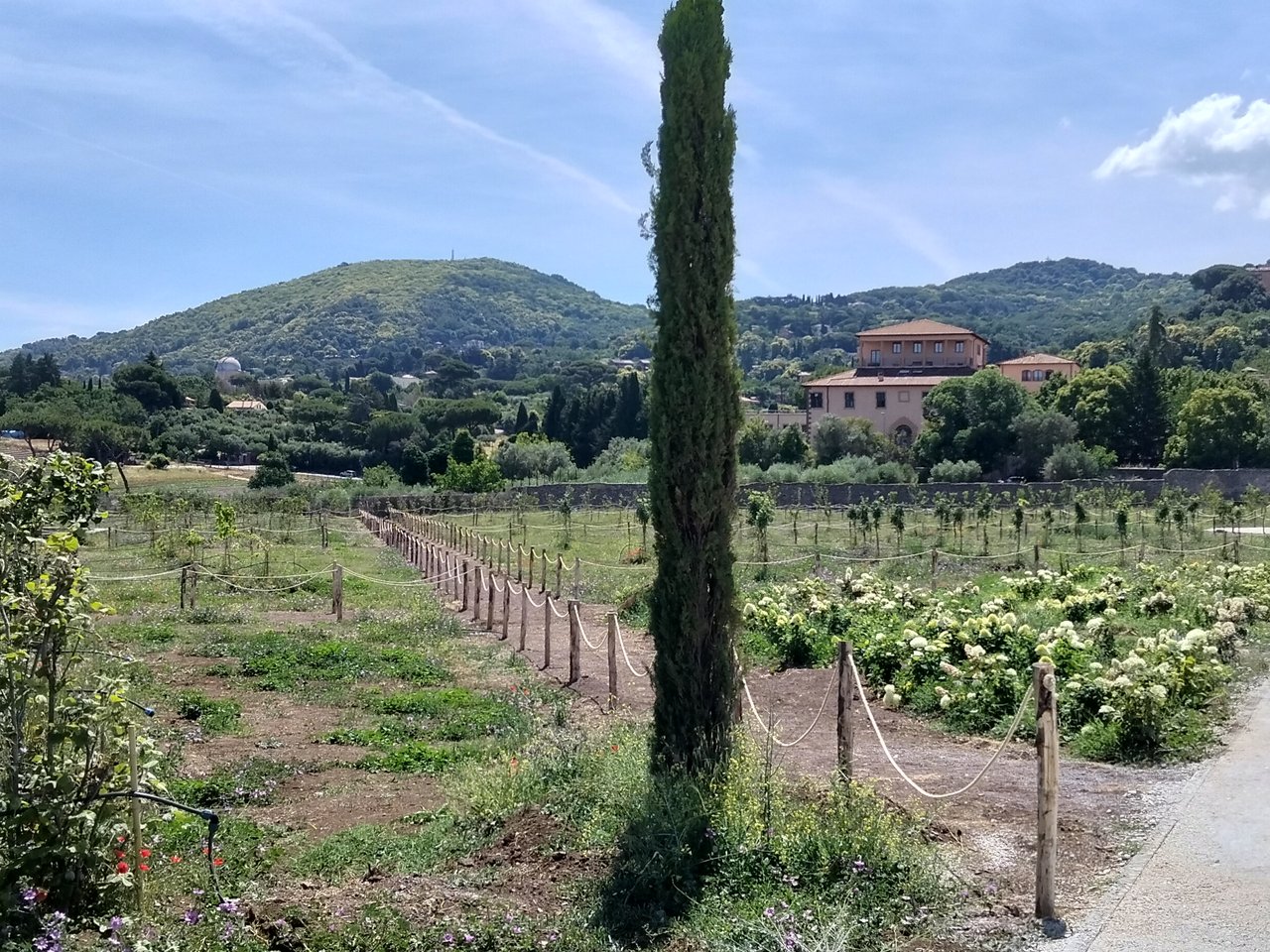
The planting of about 1,000 specimens of woody trees (fruit trees, cypresses and holm-oak shrubs), shrubs and climbers makes a significant contribution to reducing CO₂ and, above all, to increasing biodiversity — not only of plants but also of animals, with a strong rise in species useful to the garden in their various trophic roles, from controlling diseases and pests to pollination.
The complete elimination of synthetic chemicals for fertilisation — replaced by natural microbial biostimulants — causes no alteration or pollution of soil, water and air. Irrigation is for emergency support only, to sustain the plants during periods of peak drought, aided by water-retaining agents that reduce water consumption.
An agro-ecosystem with numerous plant species able to provide ecological niches for organisms, pursuing the garden’s maximum biological diversification.