Ancient fruit
Prunus domestica Thunb. · Family: Rosaceae
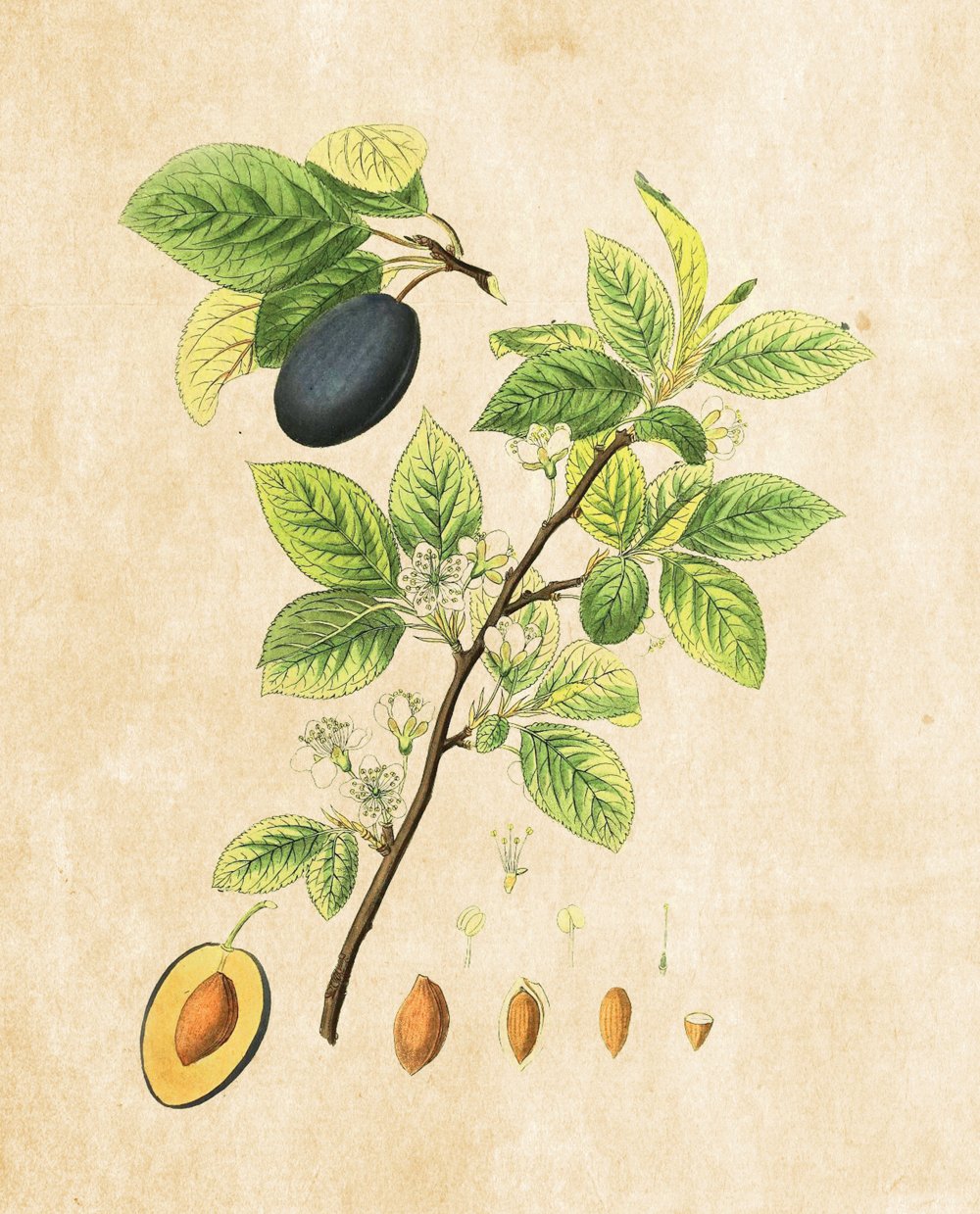
Native to the Caucasus, it was later cultivated intensively in Syria. The Romans successfully introduced it throughout the Mediterranean, but it was the Crusaders who carried and spread it across Europe around 1200. “Susina”, by contrast, is the correct name for the round fruits of Prunus salicina, a species probably of Chinese origin that reached the European countryside much more recently.
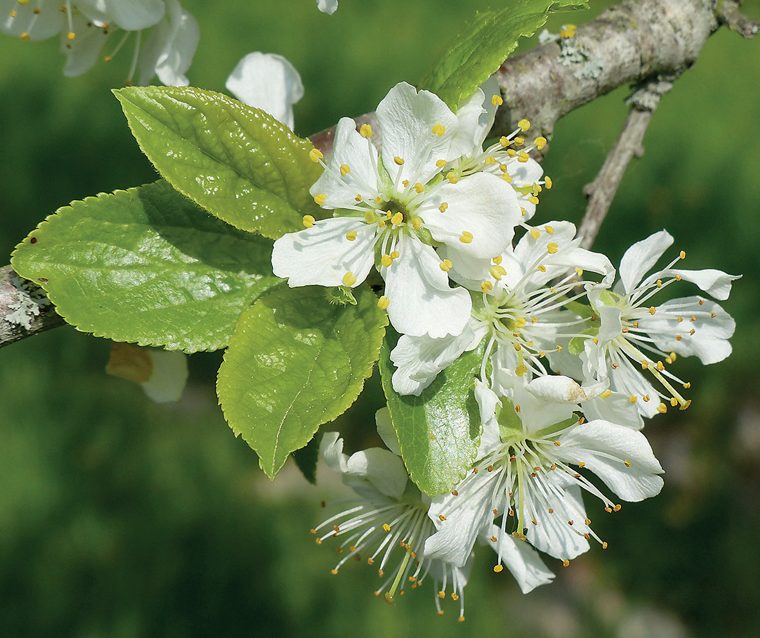
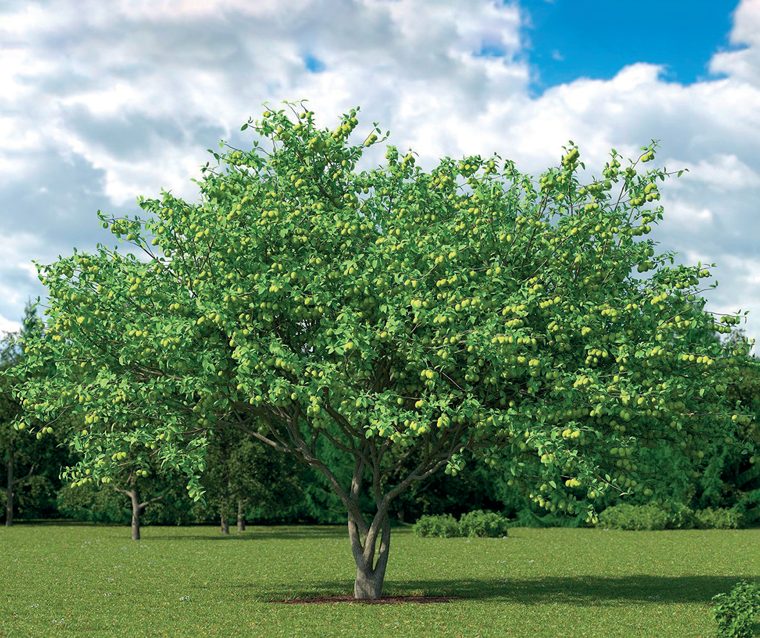
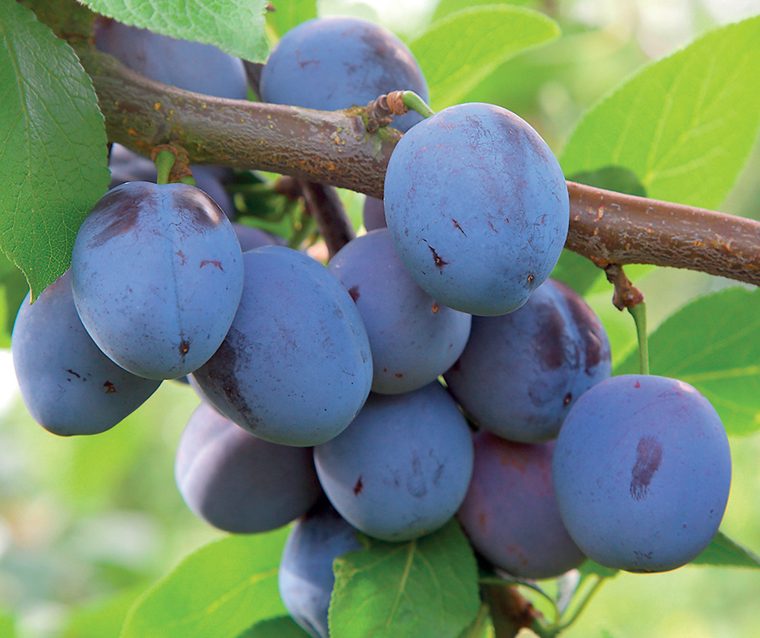
The plum tree has the typical umbrella or sapling shape, of medium size varying from 3 to 8 m in height depending on the variety. It bears beautiful, usually white flowers that emerge luxuriantly in early spring, before the leaves appear. The fruits, oval or spherical, ripen from June to October, and harvesting is done by hand in several passes, up to 5 times, to ensure proper ripeness.
The fruits are usually sweet and juicy, although some particular varieties are decidedly tart and need to be cooked at length with sugar to become edible. All Prunus varieties contain a single woody stone with a sizeable, inedible seed. Plums are eaten fresh, dried or used for delicious jams.
In the Pope’s Orchard it is brought back as a historic, now-forgotten species of the Tusculan territory: grown without synthetic chemicals, with shallow roots (within 1.5 m) so as not to interfere with the archaeology below.
Cultivars present
Coscia di monaca · Regina Claudia verde · Stanley · Recinella
Gallery